
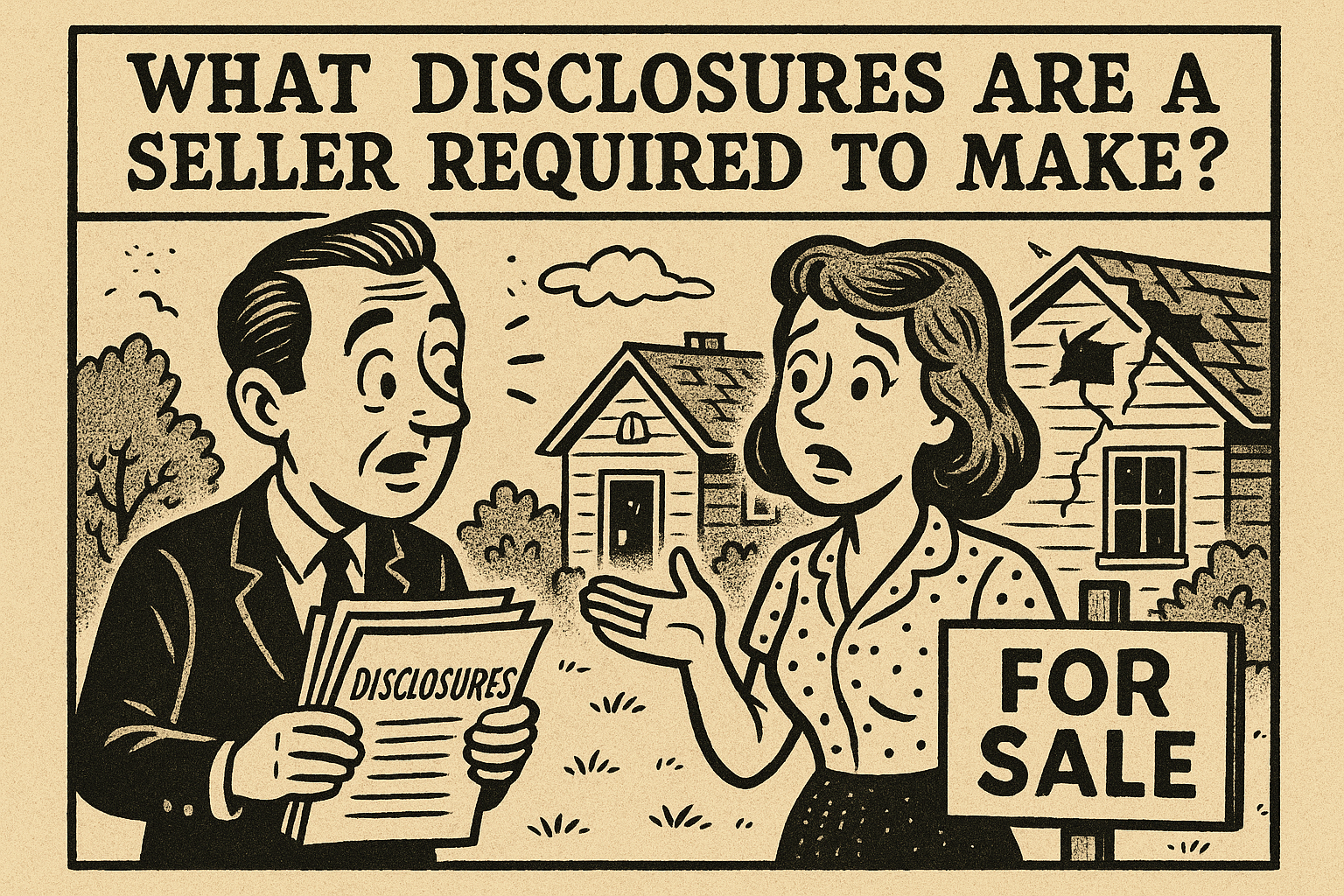
Seller Disclosure 101: What You’re Required to Share
 So, you’re ready to sell your home. You’ve decluttered, staged, maybe even considered baking a batch of cookies before showings (because nothing says “buy me” like the smell of chocolate chips in the oven). But before you hand over the keys, there’s one crucial step you can’t skip: disclosures.
Think of disclosures as the tell-all memoir of your house. Buyers want to know the good, the bad, and the “yep, that happened” moments. So what disclosures are a seller required to make?
What Exactly Are Disclosures?
Before we get into the specifics of what must be disclosed, let’s review what a seller’s disclosure even is. Disclosures are the information sellers are legally obligated to share about a property’s condition. They protect both you (the seller) and the buyer by making sure everyone is on the same page before money changes hands.
In short: it’s about honesty. And yes, that means you can’t just paint over the water stain in the ceiling and call it “modern art.”
What Disclosures Are a Seller Required to Make in Kansas City?
Here’s where it gets interesting—because Kansas City straddles two states. Missouri and Kansas have slightly different rules, and it’s important to know which side of the state line your home is on.
Missouri (Show-Me State, Show-Me Your Disclosures)
In Missouri, most sellers are required to fill out a Seller’s Disclosure Statement, which covers a wide range of potential issues, such as:
- Structural Problems – foundation cracks, roof leaks, or suspicious sloping floors.
- Water Damage & Mold – past flooding, water intrusion, or mold remediation.
- Pests – termites, mice, or raccoons who may have overstayed their welcome.
- Electrical & Plumbing – anything from faulty wiring to slow drains.
- Appliances & Systems – HVAC, water heater, and other mechanicals.
- Environmental Hazards – radon, asbestos, lead paint (especially for homes built before 1978).
- Repairs & Renovations – both permitted and unpermitted projects.
Basically, Missouri wants buyers to know everything but your Netflix password.
Kansas (The Fewer Rules Side)
Kansas law is a bit looser. The state doesn’t mandate a standardized disclosure form like Missouri does. Instead, it requires sellers to disclose known “material defects” that could affect the property’s value or safety.
In practice, most Kansas agents (and brokerages) still use a disclosure form very similar to Missouri’s because buyers expect transparency. But technically, the legal obligation is narrower.
So, if you’re selling in Kansas:
- You must disclose issues you know about (no pretending that leaky basement was just “humidity”).
- You don’t have to dig for problems you’re unaware of—though a buyer’s inspection will likely find them anyway.
 Why Honesty is the Best (and Legal) Policy
No matter which side of the state line you’re on, failing to disclose known problems can lead to lawsuits after closing. Buyers don’t like surprises—especially the expensive, crawlspace-flooding kind.
By being upfront, you’re protecting yourself and giving buyers confidence. And here’s the kicker: many buyers are more forgiving than you think. A home doesn’t have to be flawless—it just has to be transparent.
Pro Tip: Work With Your Agent
Your real estate agent is your best ally here. They’ll guide you through the disclosure process, explain what’s legally required in Kansas or Missouri, and help you avoid missing something important. Think of them as your “truth editor”—making sure your home’s memoir reads honestly but doesn’t overshare.
Selling your home is exciting, but don’t let disclosure requirements sneak up on you. Whether you’re in Kansas or Missouri, the key is to be thorough and honest. Buyers appreciate transparency almost as much as they appreciate fresh-baked cookies at a showing.
So, get your disclosures in order—and maybe keep the cookies too. They never hurt.
And remember, each state (and even city) can vary with their requirements, so this is another good reason to lean on your agent during this process.
Disclaimer: This blog is for informational purposes only and is not legal advice. Disclosure requirements can vary based on location and individual circumstances. Always consult with your real estate agent or attorney to understand the specific obligations for your property.

Dani Beyer, a Kansas City native, began her career in real estate in 2004 after working in the tech industry. Since then, she's helped thousands of families turn their dreams into keys! Dani is now the CEO and Lead Listing Specialist of 'Dani Beyer Real Estate' brokered with Keller Williams KC North. With 820+ Five Star reviews, she specializes in helping buyer and sellers in the Kansas City Northland.