
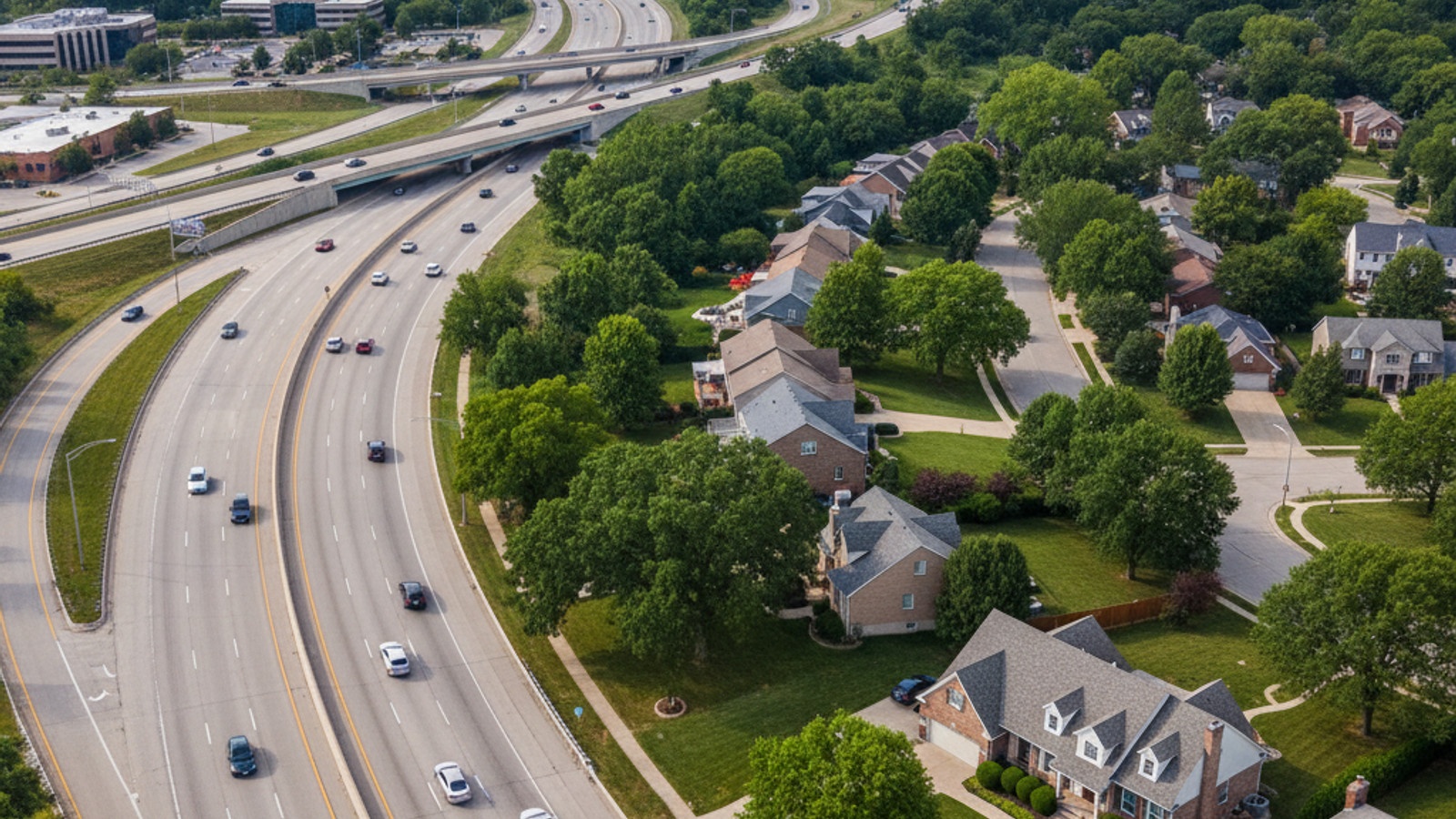
Buyers evaluating homes in Kansas City often ask about the daily drive before committing to a specific neighborhood. The sprawling nature of the metropolitan area makes understanding commute times from Kansas City MO crucial for anyone relocating here.
Spanning across the state line between Missouri and Kansas, the region is highly decentralized. You will find major employment hubs scattered from the downtown financial district all the way down to the Corporate Woods area in Johnson County.
Unlike many major coastal hubs, this region benefits from a massive highway infrastructure that keeps vehicles moving efficiently. Navigating the metro is surprisingly straightforward once you learn the major arteries and typical rush hour patterns.
This guide breaks down exactly what to expect from suburb drive times, known traffic bottlenecks, and current public transit options in 2026.
Average Commute Time in Kansas City MO vs. the U.S.
Relocating professionals are consistently surprised by how quickly they can get to work in this region. The average daily commute in the Kansas City metro sits comfortably between 21.7 and 23.2 minutes.
That local figure represents a distinct advantage when compared to the national average commute time of roughly 27.2 minutes. Drivers moving from notoriously gridlocked cities like Chicago or New York will find the daily travel times here remarkably brief.
Over 70 percent of workers in the region drive alone to work, relying heavily on the extensive interstate system. The rise of hybrid and remote work schedules has further reduced daily commute volumes, making the morning drive notably lighter on Mondays and Fridays.
Shorter travel times also translate to tangible financial savings for local homeowners. Spending less time idling in traffic reduces annual fuel consumption and minimizes long-term wear and tear on personal vehicles.
It is entirely possible to enjoy suburban acreage without sacrificing your personal time to highway gridlock.
The clear takeaway for homebuyers is that living further from the urban core does not guarantee a punishing daily drive. You can comfortably expand your property search radius without giving up hours of your week to the highway.
Best Commuter Suburbs in Kansas City MO: Drive Times to Downtown
Choosing where to live in the metro often comes down to your preferred highway corridor and proximity to major employment centers. The drive times to downtown vary depending on whether you settle on the Missouri or Kansas side of the state line.
Most suburban routes rely on the I-435 loop to funnel traffic toward the central business district. Knowing the typical travel times from these popular municipalities helps buyers narrow down their housing options effectively.
Keep in mind that these estimates reflect standard morning and evening travel conditions in 2026. Inclement weather or ongoing highway construction projects will occasionally extend your time on the road.
Overland Park, KS
Overland Park sits southwest of the city center and offers a highly direct route via I-35 North. Commuters can expect a 15 to 20-minute drive without traffic, which scales up to roughly 30 minutes during peak rush hour.
Residents living in the southern portions of the city often utilize the US-69 corridor to connect with the interstate. The highway infrastructure here is robust, but the sheer volume of daily commuters means you will encounter slowdowns near the county line.
Buyers looking at living in Overland Park should test this drive during the morning peak to gauge their comfort level.
Lee’s Summit, MO
Located to the southeast, Lee’s Summit provides a straightforward commute into the city via US-71 and I-470. The typical commute length ranges from 25 to 35 minutes depending on your exact starting point within the municipality.
This corridor moves efficiently most mornings, though the transition from I-470 onto US-71 North requires navigating merging traffic. Commuters originating from the northern edge of the suburb sometimes opt for I-70 West as a viable alternative route.
It remains a highly practical location for professionals working in the downtown hospital or financial districts.
Olathe, KS
Olathe is positioned further southwest than Overland Park, making it a slightly longer drive utilizing the I-35 North corridor. You should plan for 25 to 40 minutes on the road depending on the severity of morning slowdowns.
Drivers utilizing the K-10 highway can easily bypass local street traffic to access the major interstates. The extra distance often translates to more competitive housing prices, balancing out the extra time spent behind the wheel.
Commuters leaving Olathe before 7:00 AM generally miss the heaviest congestion entirely.
Liberty, MO
Buyers interested in the northern side of the metro frequently look at Liberty for its convenient highway access. The commute via I-35 South typically takes between 20 and 30 minutes to reach downtown.
This northern corridor is historically less congested than the southern routes, offering a smoother daily drive. Residents also have the option to use US-169 as a secondary route if the main interstate experiences an unexpected delay.
Many locals find the straightforward commute to be a major selling point for real estate in this area.
Kansas City Traffic Patterns and Rush Hour Bottlenecks
Understanding regional traffic patterns is essential for mastering your daily commute in the metro. The metropolitan area is connected by a web of primary highways, including the I-435 loop, I-35, I-70, and US-71.
Timing your commute is everything.
Typical morning rush hour windows stretch from 7:00 AM to 9:00 AM, while the evening peak hits between 4:00 PM and 6:00 PM. Traveling outside of these specific windows essentially guarantees a free-flowing drive across the entire region.
Even with favorable average commute times, the city has a few notorious bottlenecks that drivers should anticipate. The Grandview Triangle, where I-435, I-470, and US-71 converge, is a historical congestion point during the afternoon commute.
Another area prone to gridlock is the I-35 and I-635 interchange, which regularly slows down morning traffic heading north. River crossings, such as the Buck O’Neil Bridge, also experience heavy volume as vehicles funnel into the downtown grid.
Utilizing GPS navigation apps daily helps commuters route around these specific delays by taking parallel arterial roads.
Public Transportation Commute Times in Kansas City
While driving remains the dominant mode of transportation, alternative commuting methods are steadily improving across the metro. The RideKC regional transit system operates a network of buses that connect the urban core to surrounding municipalities.
Commuter express routes from outer suburbs like Lee’s Summit and Overland Park generally take roughly 40 to 50 minutes. Many of these routes utilize dedicated park-and-ride facilities, allowing residents to leave their personal vehicles in designated lots.
This option allows professionals to work or read during their transit time, offsetting the longer duration compared to driving.
Closer to the city center, the KC Streetcar serves as a completely free rapid transit option for downtown residents. The system currently runs a 2.2-mile route, with ongoing expansions extending its reach further south toward the university district.
Expanding infrastructure for public transport makes living car-lite increasingly viable for those purchasing properties near the urban core. Buyers prioritizing transit access should focus their property search along established rapid bus routes or the streetcar expansion line.
Frequently Asked Questions
What is considered a reasonable commute time in Kansas City?
Most local residents consider a 20 to 25-minute drive to be a standard and highly reasonable daily commute. Reaching the 45-minute mark is generally viewed as an exceptionally long trip within this specific metro area. Staying within a 15-mile radius of your workplace typically keeps your travel time under half an hour.
Does Kansas City have bad traffic?
Compared to other major metropolitan areas in the United States, traffic congestion here is remarkably mild. While you will experience slowdowns during the 7:00 AM to 9:00 AM rush hour, gridlock rarely lasts for extended periods. The extensive highway system efficiently disperses vehicles and prevents the severe delays seen in coastal cities.
Is public transportation a viable option for a daily commute in KC?
Public transit is a highly viable option if you live and work near the downtown core or along major bus corridors. Commuters traveling from the outer suburbs can use RideKC express buses, though the trip will take about 40 to 50 minutes. The free KC Streetcar provides excellent, rapid connectivity specifically for urban residents navigating the central business district.

Dani Beyer, a Kansas City native, began her career in real estate in 2004 after working in the tech industry. Since then, she's helped thousands of families turn their dreams into keys! Dani is now the CEO and Lead Listing Specialist of 'Dani Beyer Real Estate' brokered with Keller Williams KC North. With 820+ Five Star reviews, she specializes in helping buyer and sellers in the Kansas City Northland.