
If you are considering a move to the Midwest, mapping out your financial budget is the crucial first step. Understanding the cost of living in Kansas City MO provides a clear picture of what your dollar actually buys in this major metropolitan area.
Many buyers are surprised to find that this vibrant region offers substantial financial relief compared to traditional coastal real estate markets. Before making any commitments, it is essential to review the hard data for 2026 regarding housing, daily expenses, and local taxes.
It is also important to establish exactly which side of the state line you are targeting for your relocation. This guide focuses strictly on Kansas City, Missouri (KCMO), rather than neighboring Kansas City, Kansas (KCK), because the real estate markets and tax structures differ significantly.
The Overall Affordability of Kansas City, Missouri
When evaluating whether an area is expensive or affordable, the primary baseline is usually the United States national average. KCMO currently boasts an overall cost of living index around 88.4 to 89.0, meaning expenses run about 11% to 12% lower than the national baseline.
This favorable economic climate makes the city highly attractive to remote workers and professionals looking to relocate from higher-priced regions. You get the robust infrastructure of a major metropolitan area without the crushing financial pressure found in places like San Francisco or Seattle.
The local economy is bolstered by major corporate players like Microsoft and Visa maintaining a significant operational presence here. These employers bring strong salaries into the region, effectively raising the standard of living without driving everyday costs to unmanageable extremes.
Housing Costs: Renting vs. Buying in the KCMO Real Estate Market
Housing is typically the largest line item in any household budget, and this is where KCMO truly stands out. The local real estate market presents a noticeably lower barrier to entry for buying compared to the national average.
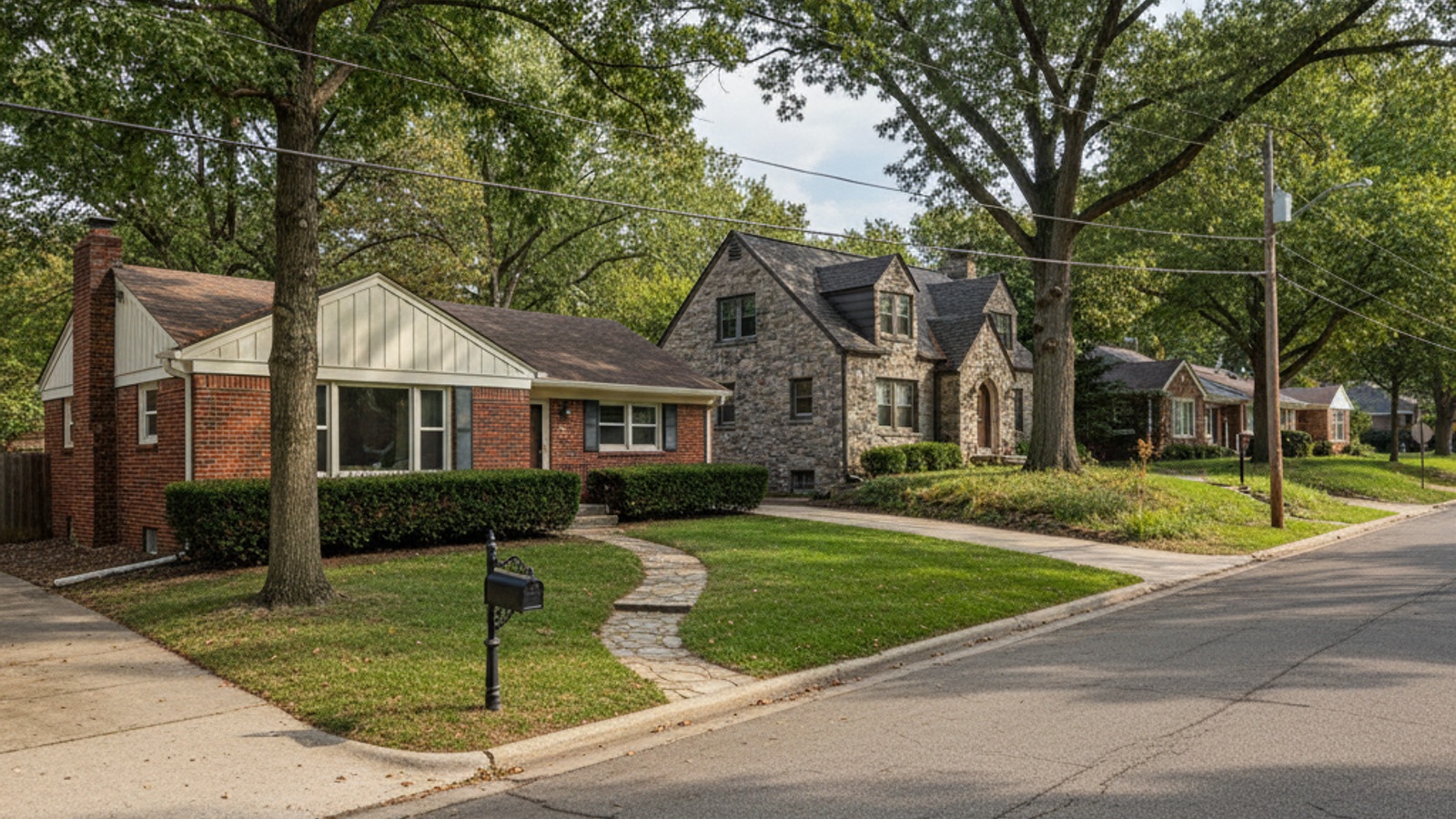
Depending on the specific neighborhood and property style, you can find a diverse range of homes for sale in Kansas City. Options range from modern urban lofts in the downtown core to spacious single-family homes in the outer metro sectors.
To give you a realistic idea of what to expect in 2026, here is a breakdown of average home costs and rental rates in the area:
- Median Home Price: Buying a property currently averages between $261,000 and $320,000, depending heavily on proximity to the city center and local amenities.
- Average Rent: Renting an apartment typically costs between $1,242 and $1,395 per month for standard one-bedroom or two-bedroom layouts.
These figures represent a highly accessible market for first-time buyers and those looking to upgrade their current living space. Your monthly mortgage payment on a $300,000 property is often comparable to, or even less than, rent in competing major cities.
Everyday Expenses: Groceries, Utilities, and Healthcare
Beyond your mortgage or rent, everyday maintenance and household expenses dictate how comfortably you can live. Fortunately, these routine costs in KCMO remain highly competitive and manageable for most residents.
Grocery prices in the area sit approximately 2.8% lower than the national average. Whether you are shopping for a single adult or stocking the pantry for a larger household, your weekly supermarket runs will consume a smaller percentage of your income.
Monthly utility bills, which include electricity, water, and high-speed internet service, generally average between $257 and $362. Keep in mind that Missouri experiences all four distinct seasons, so your annual heating and cooling expenses will fluctuate throughout the year.
Healthcare expenses also benchmark slightly below the national average, offering access to top-tier medical facilities at a reasonable price point. Buyers should be aware of local tax nuances, such as specific grocery tax rates applied in some surrounding Missouri counties.
Transportation and Commuting Costs
Getting around the KC metro area relies heavily on personal vehicles. Because the region is geographically spread out, budgeting for gas, auto insurance, and routine vehicle maintenance is a necessity for most residents.
Overall transportation expenses here run about 11% to 12% lower than the national average. Commuting times are generally favorable, and residents experience significantly less gridlock compared to larger, more congested metropolitan areas.
If you prefer public transportation, the RideKC bus system provides extensive coverage across the city. The service operates fare-free on many routes, which can dramatically reduce your annual transport budget if you live and work near major transit lines.
Your exact transportation costs will largely depend on your specific location within the metro. Living downtown offers higher walkability and transit access, while residing in the outer suburbs increases your daily driving distance and fuel consumption.
Salaries, Taxes, and the Local Job Market
A lower cost of living only benefits you if the local job market provides a sustainable income. KCMO features a robust employment landscape that helps mitigate poverty in the United States metrics locally and supports a solid middle class.
The median household income aligns well with the expenses required to maintain a comfortable living wage. Professionals in tech, healthcare, and finance frequently find that their salary stretches much further here than it would on the coasts.
Anyone relocating to Missouri needs to factor state and local taxes into their financial planning. Missouri utilizes a graduated state income tax system, meaning your tax rate scales with your earnings.
The most critical local tax detail to understand is the KCMO earnings tax. Anyone who lives or works within the city limits is subject to a 1% tax on their gross income, which funds essential municipal services and infrastructure.
Quality of Life: Is Kansas City, Missouri a Good Place to Live?
Financial data is only one part of the relocation equation. Buyers consistently search for information on the overall lifestyle and civic amenities available when living in Kansas City.
The city features a high density of public parks, extensive trail systems, and renowned local museums. Residents have direct access to major cultural hubs, including the vibrant Crossroads Arts District and the historic Country Club Plaza.
Proximity to major employment centers and top-rated school districts makes the area highly functional for daily life. Healthcare facilities are abundant, and many neighborhoods boast strong walkability scores for pedestrian access to local businesses.
Ultimately, KCMO balances its affordability with a rich array of objective community features. It delivers the infrastructure of a major city without sacrificing the accessibility that makes daily life convenient.
Before making your final decision, utilizing a local cost of living calculator can help you map out your specific financial scenario. Comparing your current expenses to the local data will provide absolute clarity on your upcoming move.
Frequently Asked Questions
What salary do you need to live comfortably in Kansas City, MO?
A single adult generally needs an income of around $50,000 to $60,000 to cover basic expenses and maintain a comfortable standard of living. This allows enough room in the budget to manage the average rent of $1,242 while still saving for the future. Exact salary requirements will scale depending on your household size and lifestyle choices.
Is it cheaper to live in Kansas City, MO or Kansas City, KS?
Kansas City, Missouri is generally slightly more expensive in terms of housing costs compared to the Kansas side. However, Kansas typically has higher property taxes, which can offset the initial savings on a home purchase. Buyers must compare the specific tax rates and home prices in their targeted neighborhoods to determine true affordability.
How does KCMO compare to cities like San Francisco or Denver?
KCMO is drastically more affordable than high-cost coastal or mountain cities like San Francisco or Denver. Housing costs are the biggest differentiator, with the $261,000 to $320,000 median home price sitting hundreds of thousands of dollars below those markets. Relocating here allows buyers to purchase significantly more square footage while reducing their overall financial burden.

Dani Beyer, a Kansas City native, began her career in real estate in 2004 after working in the tech industry. Since then, she's helped thousands of families turn their dreams into keys! Dani is now the CEO and Lead Listing Specialist of 'Dani Beyer Real Estate' brokered with Keller Williams KC North. With 820+ Five Star reviews, she specializes in helping buyer and sellers in the Kansas City Northland.