
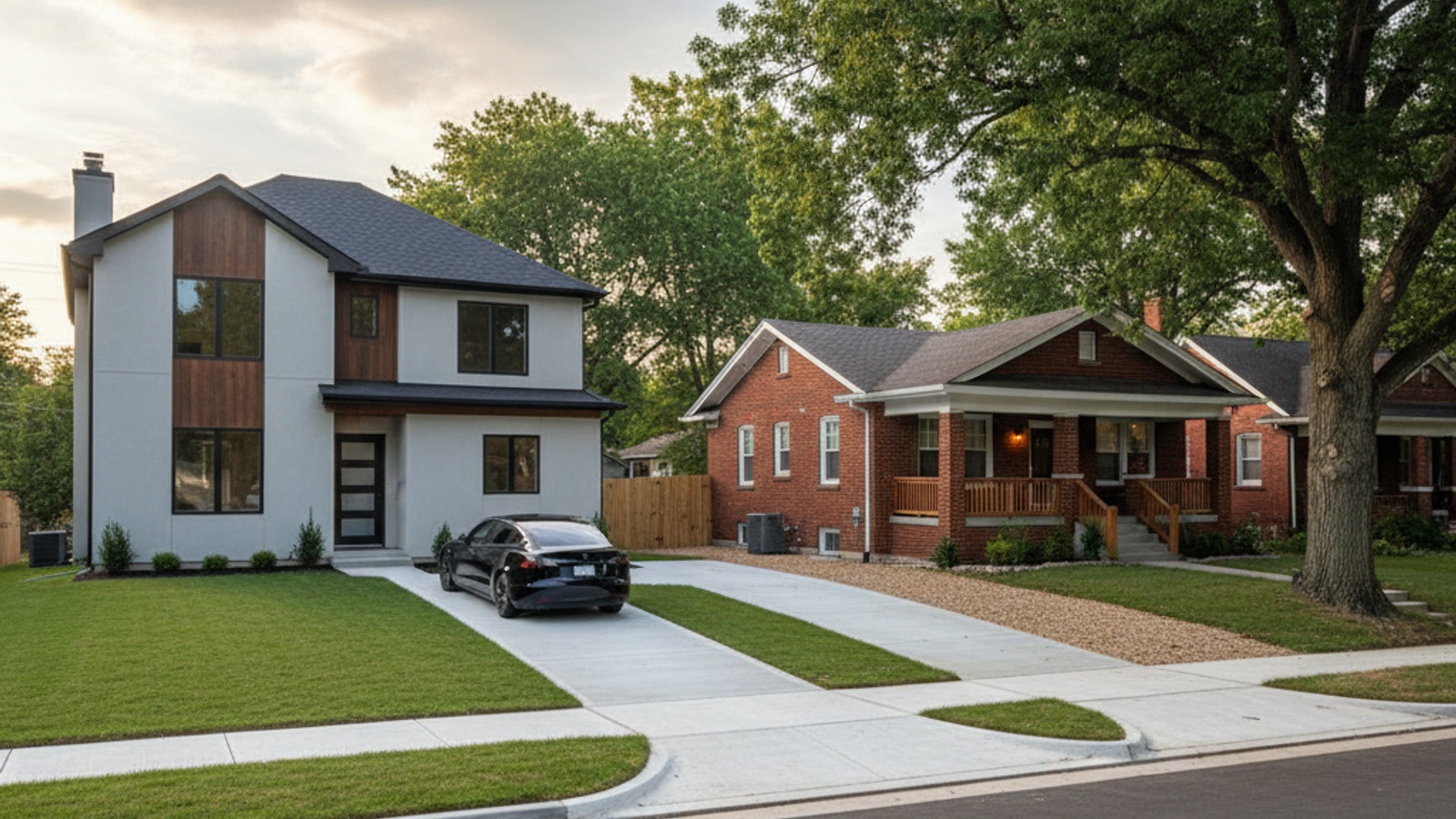
Buying a home in the Heart of America comes with a unique set of financial considerations that extend far beyond the initial purchase price. Understanding property taxes Kansas City, MO is absolutely essential for building an accurate monthly budget and avoiding unexpected financial strain. Many buyers focus entirely on their mortgage principal and interest, completely overlooking how local tax rates impact their long-term carrying costs.
The local real estate landscape spans multiple counties and jurisdictions, creating a complex patchwork of different tax obligations. A home on one side of the street might carry a noticeably different tax bill than a nearly identical property located just one block away. Mastering how these assessments work ensures you will not face any costly surprises when your winter tax bills finally arrive in your mailbox.
Understanding Kansas City, MO Property Taxes
The Missouri property tax system relies on a specific set of statutory rules to determine what homeowners owe each year. The foundation of this system is the clear difference between a property’s estimated market value and its official assessed value. The county assessor determines the market value, which represents what the home would reasonably sell for under current open-market conditions.
Rather than taxing the full market value, Missouri applies a statewide residential assessment rate to all homes. For residential real property, this statutory rate is set at exactly 19 percent across the entire state. This means you only pay taxes on a relatively small fraction of your home’s total estimated market value.
State law requires comprehensive reassessments to occur every odd-numbered year across all Missouri counties. The 2025 reassessment updated market values across the metro area, and those figures generally will remain in place until the next cycle in 2027. Property owners should always anticipate potential changes to their annual tax bill whenever a new reassessment year approaches.
Beyond residential real estate, Missouri also assesses annual taxes on tangible personal property. This secondary tax category includes vehicles, boats, and trailers owned by the taxpayer on the first day of the calendar year. Factoring in both real property and personal property obligations provides a much clearer picture of your total annual financial burden.
How Property Taxes Are Calculated
Calculating your exact real estate property tax requires following a relatively straightforward mathematical formula. You first multiply the overall market value by the 19 percent assessment rate to find your official assessed value. You then divide that assessed value by 100 and multiply it by the local levy rate to determine your final tax bill.
Consider a residential home with an estimated market value of approximately $300,000. Applying the 19 percent assessment rate to that figure gives you an assessed value of exactly $57,000. If your combined local levy rate is roughly $8.00 per $100 of assessed value, your annual property tax bill would total $4,560.
Property Tax Variations by County in the Kansas City Metro
Kansas City is geographically massive and stretches across four separate local jurisdictions with distinct tax structures. Depending on the exact neighborhood boundaries, a taxpayer living within the city limits will fall into one of the following counties:
- Jackson County MO, which contains the central downtown core and numerous southern neighborhoods.
- Clay County, covering the rapidly expanding northern suburbs and major commercial corridors.
- Platte County is situated in the northwest sector near the international airport facilities.
- Cass County is located at the far southern edge of the greater metropolitan area.
Each individual county operates its own county collector of revenue office and maintains distinct aggregate levy rates. While the 19 percent assessment rate is a strict statewide rule, your final tax burden fluctuates heavily based on these local boundaries. School districts generally play the largest and most impactful role in determining these local rate variations.
Areas within the North Kansas City Schools and Park Hill School District boundaries carry different levy rates than those in the Kansas City Public Schools footprint. Buyers should always verify the specific school district and county levy rates rather than relying on a generic citywide average. Paying close attention to these municipal boundaries can save real estate investors and homeowners thousands of dollars over the life of a loan.
Properties located within incorporated city limits face additional municipal levies compared to homes situated in unincorporated county areas. These specific city taxes fund local police departments, road maintenance projects, and municipal parks. Buyers comparing homes across different jurisdictions should carefully review the itemized tax bill to understand exactly where their money goes.
Location Factors Influencing Assessed Values
Property taxes naturally rise in tandem with overall market value appreciation in a given neighborhood. Objective local features directly impact how much a property is worth in the eyes of the county assessor. Homes located near major employment hubs and extensive transit infrastructure generally command much higher market values.
The recent Kansas City Streetcar line extension serves as a prime example of infrastructure driving property values upward. Properties situated along this expanded transit corridor have seen significant appreciation over the last few years. As the overall desirability of these connected neighborhoods increases, the corresponding assessed values rise accordingly.
Commercial development zones also heavily influence overall property valuations in the surrounding residential blocks. New retail centers, updated public parks, and improved utility grids make specific areas highly competitive for incoming buyers. While these modern amenities offer tremendous convenience, buyers must factor the resulting higher market values into their long-term tax planning.
The construction of new public facilities also plays a direct role in neighborhood valuation adjustments. When a municipality builds a new community center or upgrades local utility grids, the surrounding residential properties often become more valuable. Buyers must recognize that investing in an area with extensive new infrastructure usually translates to higher annual carrying costs.
Missouri Property Tax Timelines and the Appeals Process
Navigating the annual billing timeline is absolutely critical to avoiding severe financial penalties. County collectors typically mail out tax bills in November, and the strict payment deadline is December 31 each year. Failing to meet this firm end-of-year deadline results in delinquent status and immediate late fees.
When mailing physical payments, the United States Postal Service postmark determines whether your payment is legally on time. Dropping a check in a mailbox late on New Year’s Eve can be incredibly risky if the mail is not processed until January. Utilizing official online payment portals offers a much more reliable way to ensure your funds clear before the deadline.
If you believe your biennial reassessment is inaccurate, Missouri provides a clear and objective appeals process. Homeowners must first request an informal review with the county assessor shortly after receiving their new valuation notice in the spring. If this initial meeting does not resolve the valuation dispute, the taxpayer can escalate the case to the county Board of Equalization.
Cases that remain unresolved at the county level can eventually be appealed directly to the State Tax Commission. Successfully appealing a valuation requires solid documentary evidence, such as recent sales data for comparable homes or proof of severe structural defects. Acting quickly during an odd-numbered year is essential, as the legal window to file a formal appeal closes quite rapidly.
Many homeowners choose to roll their property taxes into their monthly mortgage payment through a dedicated escrow account. If you utilize an escrow account, your mortgage servicer handles the December 31 payment directly to the county collector of revenue. This automated strategy prevents accidental delinquent payments and removes the stress of managing a massive year-end tax bill.
Frequently Asked Questions
What is the residential property tax assessment rate in Kansas City, MO?
The residential property tax assessment rate is exactly 19 percent across the entire state of Missouri. This fixed percentage is multiplied by your home’s estimated market value to determine the official assessed value. This means a home worth $400,000 is only taxed on $76,000 of its total estimated value.
Are there property tax exemptions available in Kansas City, Missouri?
Missouri offers specific property tax relief programs for eligible residents, including a senior property tax freeze authorized by recent state legislation. Jackson County MO and surrounding counties have implemented application processes for older adults to lock in their assessed values. Taxpayers should contact their local county collector of revenue to verify specific income limits and age requirements.
What happens if I miss the December 31 property tax deadline?
Missing the December 31 deadline immediately renders your real estate property tax account delinquent. Counties will begin assessing late penalties and interest charges starting on January 1 of the new year. Continued failure to pay can eventually lead to a county tax sale where the property is auctioned off to cover the debt.

Dani Beyer, a Kansas City native, began her career in real estate in 2004 after working in the tech industry. Since then, she's helped thousands of families turn their dreams into keys! Dani is now the CEO and Lead Listing Specialist of 'Dani Beyer Real Estate' brokered with Keller Williams KC North. With 820+ Five Star reviews, she specializes in helping buyer and sellers in the Kansas City Northland.