
If you plan to sell your home in Kansas City, MO, it helps to know the median home price sits around $310,000 this year. Homes are moving off the market in a median of 19 days – but with over 1,800 active listings competing for buyers’ attention, a yard sign isn’t going to cut it.
Buyers scrolling through photos online make snap judgments. They’re deciding in seconds whether your home is worth their Saturday afternoon, and what they see on a screen shapes that call entirely. That’s why rearranging, decluttering, and presenting the space thoughtfully isn’t optional – it’s the job.
A well-prepared home lets buyers picture their own lives there. Sellers who take presentation seriously tend to have a smoother path from listing to closing. That’s not a coincidence.
Why Home Staging Matters When Selling in Kansas City
The 2025 National Association of Realtors (NAR) Profile of Home Staging reports that 83% of buyers’ agents say staging helps buyers visualize a home as a future residence. That visualization step often decides whether someone books a tour or keeps scrolling.
Local agents don’t all approach this the same way. According to the same NAR report, 21% of sellers’ agents stage all homes prior to listing, while 51% suggest the seller declutter or fix property faults instead of bringing in outside furniture. There’s no single right answer – it depends on the home.
Does staging help homes sell faster?
The NAR report doesn’t publish an official national days-on-market comparison for staged versus non-staged homes. What I can tell you is that preparation always affects buyer interest. In a market where Kansas City homes average 19 days on the market, showing up move-in-ready keeps buyers engaged rather than moving on.
Homes that look cluttered or neglected tend to sit longer and draw lowball offers. Staging removes the visual noise so buyers can actually see the square footage and natural light – the things that should be doing the selling.
Changing how buyers see a property
Empty rooms photograph smaller than furnished ones. That’s not opinion, it’s just how the eye works. Properly scaled furniture gives buyers a frame of reference – they can mentally place their own king bed or sectional instead of guessing.
Staging also draws attention toward a home’s strengths and away from its awkward corners. A well-placed rug or mirror points the eye toward a beautiful fireplace or a generous window. It’s subtle, but it works.
How Much Does Home Staging Cost in Kansas City?
The median reported staging cost nationwide was $1,500 in 2025, according to NAR data. Kansas City estimates land in a similar range, though what you actually pay depends on the size of your home and how much work it needs.
Angi reports that home staging in the area averages about $1,800, with a typical range of $150 to $5,000. For professional services that include furnishing a space, expect to pay roughly $600 per room.
Professional staging cost ranges
Full-service staging for a vacant home generally starts with a consultation fee between $150 and $600. Porch data puts the cost of furnishing an entire house anywhere from $2,000 to $6,000, depending on square footage. Some companies charge by the hour rather than a flat package rate – ProMatcher estimates local hourly costs at $110 to $130, including the labor to move and arrange everything.
DIY staging on a budget
If the budget is tight, consider paying a professional for a consultation and handling the physical work yourself. Thumbtack data shows a two-hour consultation runs about $200 and includes specific, actionable guidance you can actually use.
That hybrid approach keeps your total spend between $150 and $300. Use the furniture you already own, borrow a few accessories from friends or family, and let the professional’s eye do the directing.
Vacant versus occupied staging costs
Vacant properties cost more because the stager has to supply everything – furniture, rugs, artwork – and monthly rental fees on those items add up fast if the home doesn’t move quickly.
Occupied staging works with what you already have. The stager rearranges, edits, and might bring in a few neutral pillows or throws. The price tag stays considerably lower.
Professional Staging vs. DIY: What Makes Sense for Your Home
The honest answer is that it depends – on your budget, your timeline, and the current condition of the house. Both approaches work in Kansas City when executed well.
A listing agent will typically walk through the property and give you a straight read on how it stacks up against the competition right now. That walkthrough usually clarifies pretty quickly how much intervention is warranted before the photographer shows up.
When to hire a professional stager
If your home is completely vacant, a professional makes the most sense. Empty rooms feel cold and buyers genuinely struggle to gauge scale – rented furniture solves that problem in a single day. Sellers with outdated furnishings or highly specific design tastes also benefit from an outside perspective. A professional brings in modern, neutral pieces with broad appeal, which is exactly what you need when you’re trying to attract the widest possible pool of buyers.
What a professional stager does
A stager evaluates the flow of every room – traffic patterns, focal points, sightlines. Bulky pieces that block the view get pulled out; seating gets arranged to feel intentional and to highlight architectural details. They also manage all the logistics of moving inventory in and out of the property, which saves you real hours during an already demanding stretch.
A realtor-approved DIY staging checklist
Focus your energy on the rooms that actually move the needle for buyers: the entryway, living room, kitchen, and primary bedroom. Start by packing away out-of-season clothing, excess books, and countertop appliances. Clean the windows, replace burnt-out bulbs, and arrange your remaining furniture so there are clear, wide pathways through every room.
Room-by-Room Staging Tips From a Local Realtor
Buyers form their opinion of a house within the first few minutes of a tour. Every room needs to feel bright, spacious, and well-maintained – that’s what justifies a strong offer.
Working through the house one room at a time keeps the process manageable. Small adjustments in furniture placement and lighting often deliver immediate, visible results.
Living room and kitchen
In the living room, pull furniture away from the walls to create a seating area that draws the eye toward a focal point – a fireplace, a large window. Remove personal photos, excess throw pillows, and heavy drapes that eat up natural light.
Kitchens sell homes. That’s just true. Countertops should be nearly bare – the toaster, blender, and knife block all need to disappear. One bowl of fresh fruit or a simple vase of flowers is enough to add life without adding clutter.
Primary bedroom and bathrooms
The primary bedroom should feel like a retreat. Crisp white bedding, plumped pillows, cleared nightstands – think hotel room, not guest room that’s been absorbing holiday overflow. Bathrooms require meticulous cleaning and minimal accessories. Pull all daily toiletries off the shower and counters, hang fresh white towels, and replace the shower curtain if it’s seen better days. That last one is a $20 fix that photographs surprisingly well.
Curb appeal and the entryway
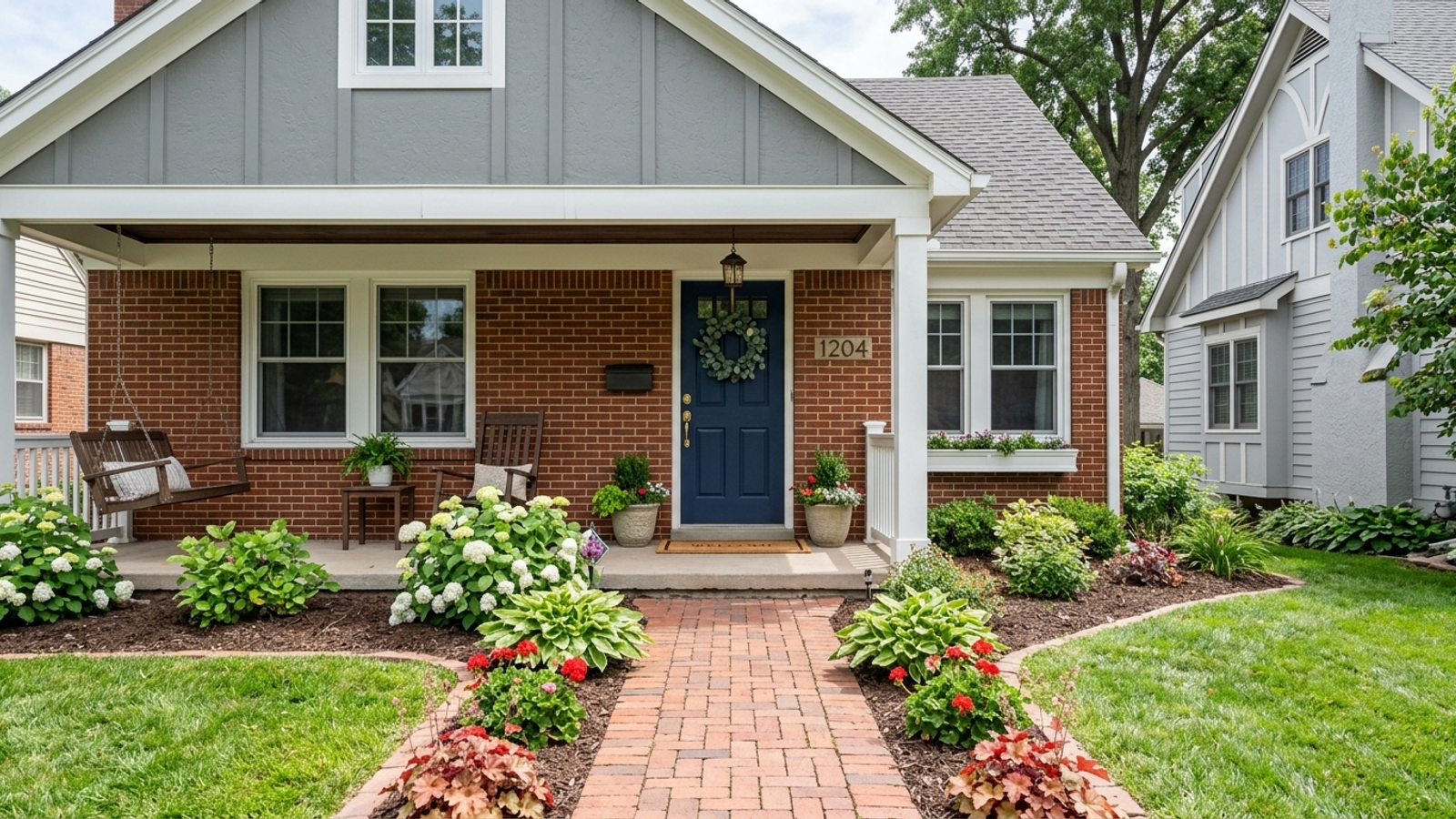
The exterior is the first thing buyers see when they pull up, so the lawn needs to be mowed, overgrown bushes trimmed, and fresh mulch added to the flower beds. Don’t underestimate that.
The entryway sets the tone for everything that follows. A freshly painted or wiped-down front door, a clean welcome mat, and a foyer free of shoes and coats tells buyers the home has been cared for before they’ve seen a single room.
Decluttering and depersonalizing
Buyers want to imagine their belongings in the space, not yours. Family portraits, diplomas, and personalized decor make that harder than it sounds – so they go into storage.
Renting a storage unit for a few months is a smart move for excess furniture and boxes. A half-empty closet looks twice as large to a buyer and signals that the home actually has enough storage. It’s one of those counterintuitive things that reliably works.
Staging an Occupied Home versus a Vacant Listing
Living in a house while it’s on the market is its own particular challenge. You’re trying to maintain a show-ready appearance while also, you know, living your life.
Vacant homes present a different problem – they offer a blank canvas but can easily feel sterile. Your situation determines your strategy, so it’s worth thinking through the specifics.
Tips for staging while you still live there
Invest in attractive baskets and bins to corral daily clutter before showings. Keep a laundry basket handy for stray items, and when you leave for a tour, take it with you. Establish a daily routine – wipe down counters, make beds, open all the blinds before you head out. It takes discipline, but it means you’re always ready when a last-minute showing request comes in, and in a 19-day market, those requests happen.
When virtual staging makes sense for a vacant home
Virtual staging uses software to add digital furniture to photos of empty rooms, which helps online shoppers understand the layout and scale of a property without the cost of renting physical pieces. It can meaningfully improve click-through rates on your listing.
The limitation is straightforward: buyers still walk into an empty house during the actual tour. Virtual staging works best for budget-conscious sellers or properties with a floor plan that’s easy to read even without furniture.
Home Stagers and Staging Services Near Kansas City, MO
The Kansas City metro has a solid network of design professionals who specialize in preparing homes for the market. Finding the right one comes down to your location, budget, and how quickly you need to move.
Before you sign anything, look at the company’s portfolio. You want to see their work in homes similar to yours – same price point, similar square footage – so you have a realistic sense of what you’re getting.
What to look for in a local stager
Confirm they cover your specific neighborhood. Some businesses restrict their delivery radius or tack on significant travel fees for homes on the edges of the metro. Also look for professionals who carry their own inventory rather than renting from third-party furniture stores – stagers with their own warehouses tend to have more flexibility and can turn installs around faster.
Questions to ask before you hire
Find out how long the initial rental period lasts and what the monthly renewal fees look like if the home doesn’t sell right away. Ask whether they require a minimum number of rooms. And get clarity up front on who’s responsible for moving your existing furniture out – many staging companies require the home to be completely prepped and vacant before their truck arrives.
Local staging partners to consider
Rooms ReBorn KC is located in south Overland Park and provides custom solutions for the greater metro area. They require appointments at their 15455 Metcalf Ave suite and handle local delivery, though they don’t offer out-of-state shipping.
Lemon Drop Home, based in Overland Park, offers occupied, vacant, and virtual staging across a wide service area that includes Belton, Grandview, and Shawnee. Stage KC, based in Olathe, offers a service where they stage using your own furniture for $150 for the first hour and $100 per additional hour.
Home Staging FAQs
Does home staging help sell a house faster in Kansas City?
Yes, proper preparation keeps buyers engaged. The National Association of Realtors doesn’t publish a specific days-on-market comparison, but 83% of buyers’ agents report that staging helps buyers visualize the property as their future residence – and that visualization is what drives showings.
How much does it cost to stage a house in Kansas City, MO?
Professional staging in the area typically averages around $1,800. Full-service vacant staging can range from $2,000 to $6,000 depending on square footage, while an hourly consultation runs $110 to $130 per hour.
What’s the difference between hiring a professional stager and DIY staging?
A professional stager manages the entire process – neutral furniture, physical labor, logistics. DIY staging means using your own belongings, usually guided by a professional consultation that costs $150 to $300.
What should I NOT do when staging my house?
Don’t leave personal photos, bold paint colors, or daily clutter visible to buyers. Overcrowding rooms with bulky furniture is another common mistake – it makes the space read smaller than it actually is.
How should I stage a house I’m still living in vs. an empty one?
For an occupied home, focus on deep cleaning, depersonalizing, and hiding daily clutter in baskets before showings. Empty homes need rented furniture to give buyers a sense of scale and purpose for each room.
What is virtual staging, and is it enough for my listing in Kansas City?
Virtual staging adds digital furniture to listing photos to improve online appeal. It’s effective for driving internet traffic, but buyers will still walk into an empty house during their physical tour.
How long does home staging take before I can list?
It depends on the scope. A DIY decluttering effort might take a weekend. A professional vacant staging installation typically happens in a single day once the home is clean and ready.
Ready to List in Kansas City? Get a Free Staging Walkthrough
Preparing a home for the market is a collaborative process between the seller and their listing agent. A pre-listing walkthrough helps you figure out which repairs and updates will actually move the needle – and which ones aren’t worth your time or money.
With the median home price sitting at roughly $310,000, a polished presentation is how you attract the strongest possible offers. An agent can tell you exactly where your time and budget are best spent.
What a listing consultation looks like
During a consultation, an agent tours your home to assess its condition, layout, and natural light, then offers specific suggestions – furniture arrangements, items that should go into storage, things worth fixing before photos. The meeting also covers pricing strategy and market conditions. You’ll leave with a clear timeline of what needs to happen before the photographer arrives.
Connecting with a local stager
If your home needs more than a straightforward decluttering, your agent can point you toward trusted professionals in the Kansas City area. Those established relationships matter – they tend to mean faster scheduling, reliable service, and fewer surprises.
A coordinated approach between your agent and a local stager is how you hit the market looking your absolute best.

Dani Beyer, a Kansas City native, began her career in real estate in 2004 after working in the tech industry. Since then, she's helped thousands of families turn their dreams into keys! Dani is now the CEO and Lead Listing Specialist of 'Dani Beyer Real Estate' brokered with Keller Williams KC North. With 820+ Five Star reviews, she specializes in helping buyer and sellers in the Kansas City Northland.