
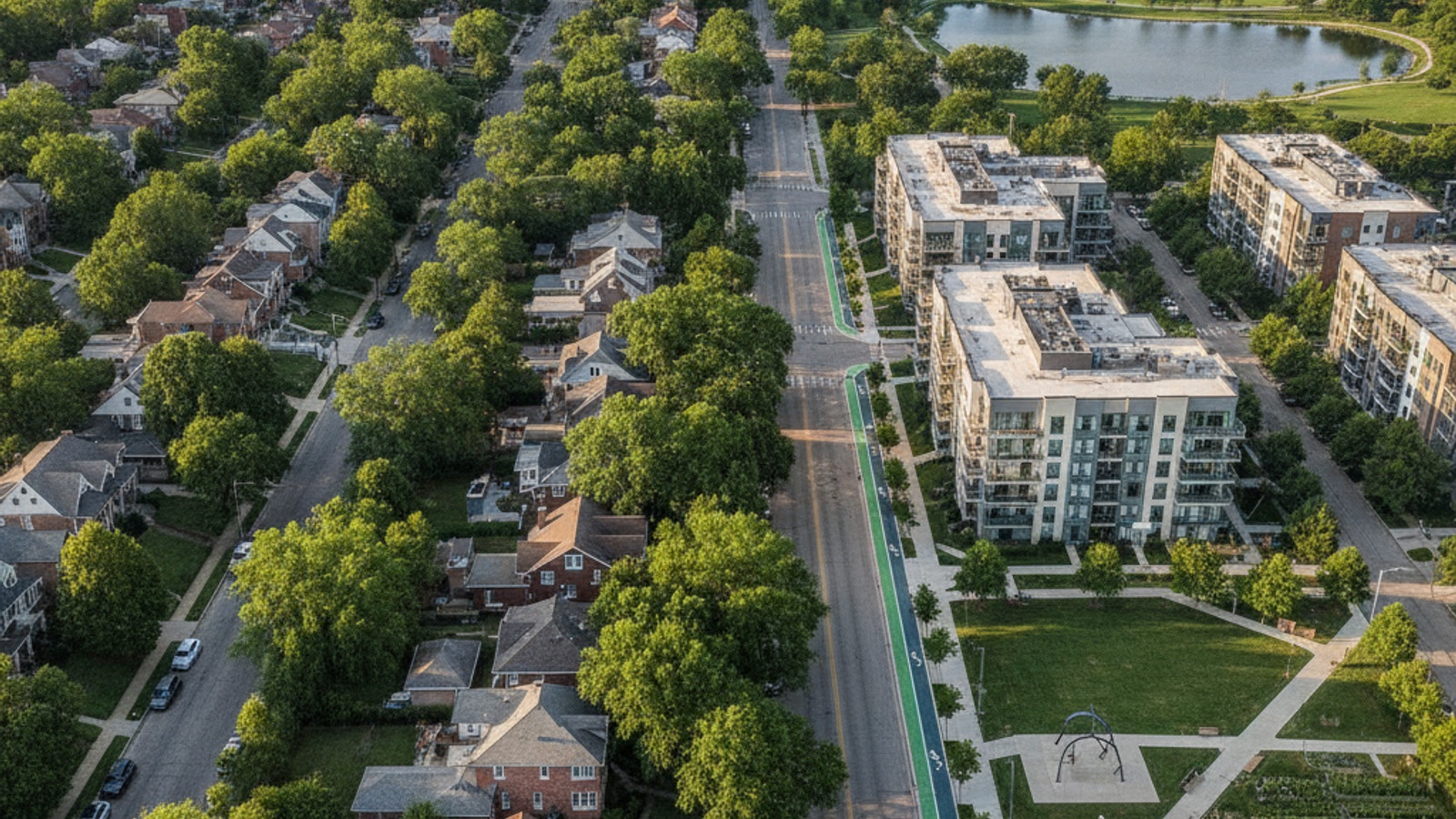
The median home price in Kansas City, MO hovers around $291,000, making it an attractive destination for buyers relocating for work. Employment opportunities span multiple sectors, drawing new residents from more expensive coastal cities. A lower cost of living combined with steady wage growth presents a strong case for moving to the Midwest.
Understanding the employment landscape helps buyers decide which neighborhoods align with their daily commute. Whether you are transferring with a current employer or seeking a new position, the local economy provides a steady foundation for purchasing a home. Evaluating local career opportunities requires looking at specific growth sectors and regional infrastructure.
The Current State of the Employment Landscape
The unemployment rate in the metro area sits between 3.9% and 4.1% as of early 2026. This figure aligns closely with broader United States labor economics, reflecting a stable environment for those seeking work. The local workforce benefits from a diverse economic base that does not rely on a single industry to sustain growth.
Development initiatives across Missouri continue to support ongoing hiring efforts. Local government and private sector partnerships have focused on expanding infrastructure, which directly impacts job creation in the region. These public works projects generate immediate construction roles while laying the groundwork for future commercial expansion.
Employers here value practical experience alongside formal credentials. Many organizations actively recruit talent from neighboring states, keeping the local applicant pool active and well-rounded. This steady influx of new workers helps sustain demand in the local housing market.
Top Industries and Growth Sectors Driving Hiring
The central location of Kansas City, MO near the Kansas border makes it a natural hub for transit and trade. Companies take advantage of the highway network to distribute goods across the Midwest. This geographic advantage supports steady growth in several major economic sectors.
Job seekers will find consistent hiring patterns across a few primary fields that anchor the local economy. These industries provide a wide range of career paths for incoming residents.
- Healthcare and Life Sciences: Regional hospitals and medical research facilities consistently seek clinical staff and administrative professionals. This sector offers strong long-term stability for workers at all education levels.
- Technology and Engineering: IT firms and data centers continue to expand their footprint across the metro area. These companies frequently hire software developers, network engineers, and cybersecurity analysts.
- Manufacturing and Logistics: Warehousing and supply chain operations offer numerous roles, from facility management to logistics coordination. The area’s central location ensures this sector remains a permanent fixture in the local economy.
Major Employers and Corporate Headquarters
Several large organizations maintain their corporate headquarters or major regional offices in the city. These companies shape local hiring trends and often set the standard for regional pay scales. Their presence provides a reliable baseline for the regional economy.
Large institutions provide a mix of entry-level roles and advanced career opportunities. Prospective buyers often target neighborhoods within a short drive of these major campuses.
- Healthcare Systems: Children’s Mercy Hospital and Saint Luke’s Health System employ thousands of medical and support staff. These campuses operate around the clock, creating demand for housing with easy highway access.
- Corporate Enterprises: Hallmark and Oracle maintain massive workforces, offering roles in everything from creative design to health information technology. These corporate centers draw specialized talent from across the country.
- Government Agencies: City, state, and federal offices provide public sector employment, including administrative and public works positions. These roles often feature structured advancement tracks and long-term pension benefits.
What to Expect with Salaries and Applications
Average salaries in Missouri generally stretch further than they do in coastal markets due to a lower cost of living. A mid-level salary here often provides enough purchasing power to enter the local real estate market. Buyers relocating from higher-priced states often find they can afford more square footage on a comparable income.
Preparing a strong resume involves highlighting relevant work experience and any required academic degree. Some entry-level positions do not require a college background, accepting a General Educational Development certificate instead. Networking through local professional organizations often yields strong leads for unadvertised positions.
Applicants should expect standard screening procedures during the hiring process. Government agencies and many private employers require a background check or criminal record review before finalizing an offer. Military veterans transitioning to civilian roles may need to submit a DD Form 214 to verify their service record.
Corporate culture in the area places a strong emphasis on business diversity and inclusion. Many local companies have established workforce protections covering gender, sexual orientation, and gender identity to support their employees. These policies help attract a wider range of candidates to the region.
Commuting and the Public Transit System
Most residents rely on the highway system for their daily commute. Interstate 70 and Interstate 35 serve as the primary arteries, connecting residential areas to central business hubs. Commuters traveling from the Northland or outer suburbs utilize these interstates daily.
Rush hour traffic adds time to the drive, but commutes generally remain manageable compared to larger metropolitan areas. Buyers should test their potential drive times during peak hours before committing to a specific location. Traffic patterns can vary widely depending on ongoing road construction projects.
The public transportation network offers alternatives for those working downtown. The KC Streetcar recently completed major expansion phases, extending south to UMKC in late 2025 and north to Berkley Riverfront Park in May 2026. These routes provide direct access to major employment centers without the need for daily highway driving.
These transit extensions allow more workers to commute without a personal vehicle. Properties located within walking distance of a streetcar stop often command higher prices due to this added convenience. Buyers prioritizing a short commute frequently target neighborhoods along this rail corridor.
Housing Options Near Major Work Centers
The median home sale price within the Kansas City, MO limits is approximately $291,000 as of early 2026. Buyers looking in the broader metro area will find median prices extending into the $300,000s. This pricing structure allows many dual-income households to comfortably purchase a property shortly after relocating.
Downtown and the Crossroads Arts District offer a variety of lofts and modern condominiums. These properties appeal to buyers who prefer a short walk to their office and immediate access to urban amenities. The maintenance-free lifestyle of a condominium works well for professionals who travel frequently for business.
Buyers seeking single-family homes with yards often look toward neighborhoods slightly further from the urban core. These areas provide features like nearby elementary schools, dedicated park access, and driveway parking. The slightly longer commute is often offset by the increase in private outdoor space.
Balancing housing costs with your new salary is a straightforward process in this market. The diverse range of property types ensures that most buyers can find a home that fits their budget and commute preferences. Many relocating professionals choose to lease an apartment during their initial probationary period before purchasing a permanent residence.
Frequently Asked Questions
What jobs are currently in demand in Kansas City, MO?
Healthcare, technology, and logistics lead the local demand for workers. Hospitals continuously hire registered nurses, while expanding tech firms seek software engineers and data analysts to support their operations.
Is it hard to find a job in Kansas City right now?
The local unemployment rate of around 4% points to a steady hiring environment. Job seekers with specialized skills in supply chain management or healthcare generally secure interviews quickly upon arriving in the city.
What is a livable salary in Kansas City, MO?
A single person can comfortably manage housing and daily expenses on a salary of $60,000 to $70,000. This income level easily supports renting a modern apartment or saving for a down payment on a median-priced home.

Dani Beyer, a Kansas City native, began her career in real estate in 2004 after working in the tech industry. Since then, she's helped thousands of families turn their dreams into keys! Dani is now the CEO and Lead Listing Specialist of 'Dani Beyer Real Estate' brokered with Keller Williams KC North. With 820+ Five Star reviews, she specializes in helping buyer and sellers in the Kansas City Northland.