
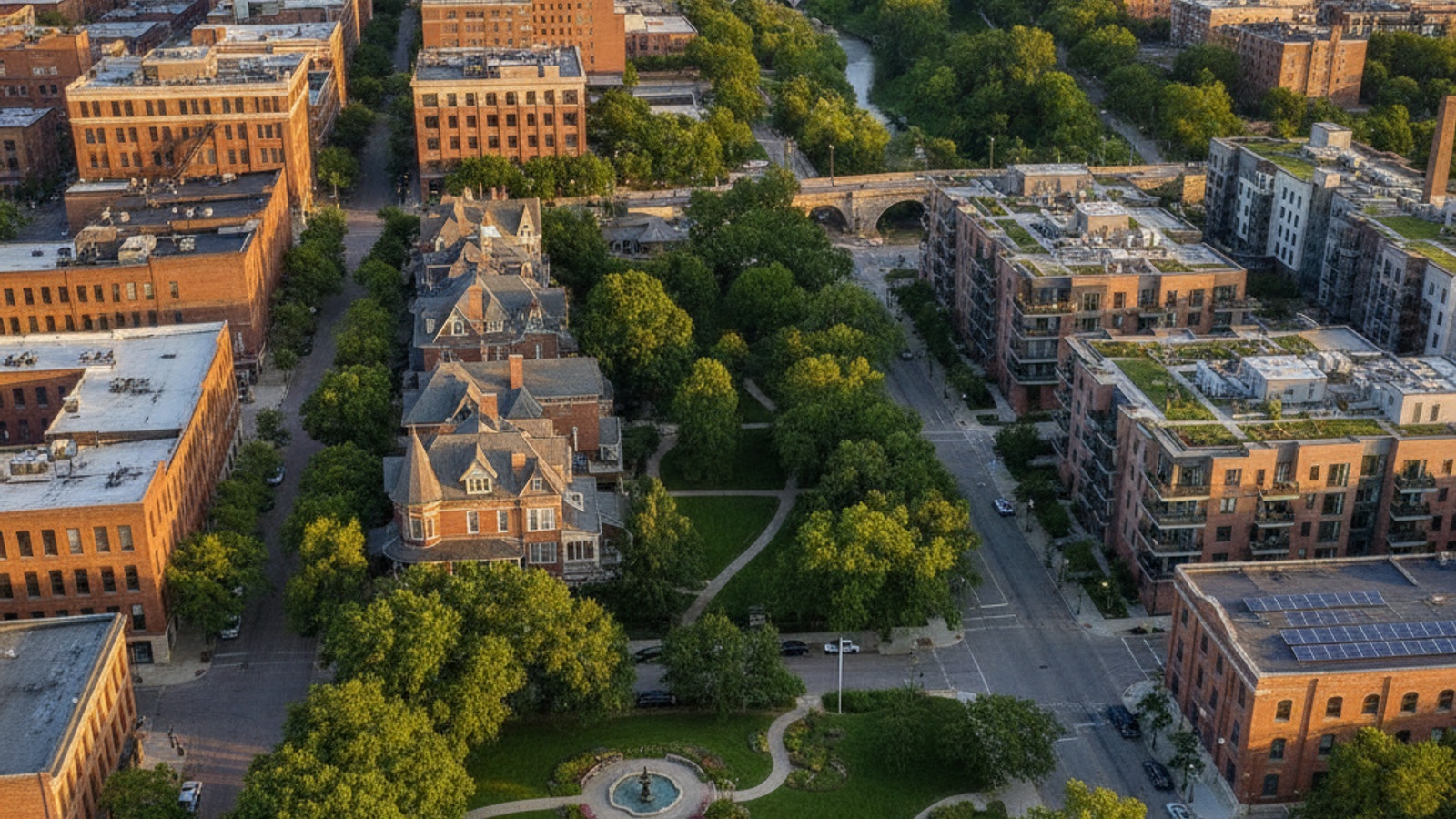
The history of Kansas City, MO shapes the physical layout and housing options available to buyers today. From its origins as a riverfront trading post to its expansion into a major metropolitan hub, the city’s past is visible in its brick lofts, tree-lined boulevards, and distinct neighborhood borders. Understanding this timeline helps buyers make sense of local real estate values and architectural styles.
Many historic buildings that once housed the meat-packing industry or the garment trade are now premium residential spaces. The city’s early streetcar routes and park systems still dictate the flow of the Kansas City metropolitan area. Knowing the origins of these areas provides valuable context when evaluating properties across different districts.
The Founding of a Riverfront Trading Post
The physical location of the city was dictated by the confluence of the Missouri River and the Kansas River. This junction made the area a natural hub for the early fur trade. Settlers relied on these waterways to move goods before road networks existed.
John Calvin McCoy, often considered the father of Kansas City, played a central role by establishing Westport as an inland outfitting post. He soon realized a closer river landing was needed to offload supplies. This led to the 1838 founding of the Town of Kansas along the riverbank.
The settlement quickly transitioned from a modest river outpost into a major supply stop for travelers heading west. Pioneers stocking up for the Santa Fe Trail and the Oregon Trail funneled money and resources into the local economy. The area officially incorporated as the City of Kansas in 1853, setting the stage for permanent residential growth.
For buyers looking at properties near the riverfront today, the original layout of these early outposts still influences street grids and commercial zoning. The historical footprint of the original town remains the anchor for downtown development.
Why the City Sits on the Missouri Side
A common point of confusion for newcomers is the state line dividing the region. The explanation comes down to the timeline of American statehood. Missouri became a state in 1821, long before the Kansas Territory was established.
When surveyors drew the western border of Missouri, they used the junction of the Kansas and Missouri rivers as the starting point. The Missouri settlement developed first, claiming the prime riverfront real estate. As the population grew, Kansas City annexed surrounding land to expand its footprint south and east, while Kansas City, Kansas, formed later on the western side of the state line.
Railroads, Stockyards, and Industrial Expansion
Following the American Civil War, the local economy shifted from trail outfitting to heavy industry. The opening of the Hannibal Bridge in 1869 connected the city to Chicago, making it a dominant railroad hub. This infrastructure drew massive investment and rapid population growth to the area.
The industrial boom centered around the West Bottoms neighborhood, where the Kansas City Stockyards opened in 1871. This meat-packing industry transformed the local economy, creating thousands of jobs and driving demand for worker housing. The stockyards operated continuously until 1991, leaving a massive physical footprint on the city.
Today, the remnants of this industrial era provide some of the most distinct real estate opportunities in the region. Buyers interested in large, open-concept living spaces often look to the West Bottoms. The massive brick warehouses built during the railroad boom are continually being converted into residential lofts.
The Signature Shirtwaist Home and Historic Architecture
Residential construction between 1900 and 1920 introduced a distinct architectural style that still defines many midtown neighborhoods. The Kansas City Shirtwaist home features a solid stone or brick foundation on the first level, topped by wood lap siding or stucco on the upper stories. These homes typically include a symmetrical front porch and a steeply pitched roof.
You will find dense clusters of Shirtwaist properties in areas that developed during the turn of the century. These homes offer a durable build quality and a distinct visual character that remains popular with modern buyers. Maintaining the original stone foundations is a common inspection item when purchasing these century-old properties.
Commercial architecture from the same era is concentrated in downtown Kansas City. The Garment District once produced a quarter of all women’s clothing in the United States, employing thousands of workers. Developers have since converted these multi-story manufacturing buildings into luxury apartments and condos.
Notable Historic Districts for Real Estate
Several distinct districts showcase the city’s evolution through the 19th and 20th centuries. Each area offers a different mix of housing stock, commercial space, and historical context. Buyers often target these specific neighborhoods for their preserved character.
The historical identity of these areas dictates the type of properties available today. From early jazz hubs to former affluent enclaves, the original purpose of the neighborhood shapes its current real estate market.
- Westport: Originally an independent outfitting town, Westport evolved into an integrated commercial and residential district. The area features some of the oldest commercial properties in the city, surrounded by established single-family homes.
- 18th and Vine: This district served as the epicenter of Kansas City jazz during the 1920s and 1930s. Guided by the political influence of Tom Pendergast during Prohibition, the area became a cultural landmark that is now the focus of targeted preservation efforts.
- Quality Hill: Built as an early residential neighborhood for affluent citizens, Quality Hill sits on a bluff overlooking the river. The area has transitioned into a dense residential zone featuring restored townhomes and modern apartment complexes.
George Kessler and the Parks System
The layout of modern residential areas owes a great deal to the City Beautiful movement of the late 19th century. In 1893, landscape architect George Kessler presented a master plan to introduce organized green spaces to the rapidly expanding city. His design created a connected network of parks and tree-lined boulevards.
This infrastructure directly influenced property values and neighborhood development patterns. Developers like J. C. Nichols later utilized this boulevard framework when designing the Country Club Plaza and surrounding residential districts. Homes located along these historic boulevards consistently command a premium in the local market.
Kessler’s plan also led to the creation of massive public spaces that benefit nearby homeowners. Swope Park, encompassing 1,805 acres, remains one of the largest municipal parks in the country. Properties bordering these established green spaces benefit from mature trees and protected natural views.
Connecting the Past to Modern Transit
The city continues to integrate its historic foundations with modern infrastructure. Older commercial hubs like the City Market and the West Bottoms are experiencing ongoing revitalization as mixed-use developments. These projects blend historic brick facades with modern energy-efficient interiors.
Transit expansion is making these historic neighborhoods more accessible than ever. The Kansas City Streetcar system now connects distinct historic zones, reducing the need for daily driving in the urban core. The Main Street Extension to the University of Missouri–Kansas City opened in October 2025, linking downtown directly to the university district.
City planners have continued this momentum with the recent Riverfront Extension, which opened on May 18, 2026. This new line connects the historic riverfront directly to the central business district. Buyers should factor the convenience of the streetcar into their location decisions when evaluating properties downtown.
Frequently Asked Questions
What is Kansas City historically known for?
The city is recognized for its origins as a major riverfront trading post and its massive meat-packing industry in the West Bottoms. During the 1920s, it also became a legendary hub for jazz music, centered around the 18th and Vine district. Today, that industrial and cultural history is preserved in local architecture and museums like the National World War I Museum and Memorial.
Why is Kansas City in Missouri and not Kansas?
The border placement comes down to territorial timing. Missouri entered the Union in 1821, claiming the strategic riverfront land where the Kansas and Missouri rivers meet. The state of Kansas was not established until 1861, leading to a separate municipality forming on the western side of the river.

Dani Beyer, a Kansas City native, began her career in real estate in 2004 after working in the tech industry. Since then, she's helped thousands of families turn their dreams into keys! Dani is now the CEO and Lead Listing Specialist of 'Dani Beyer Real Estate' brokered with Keller Williams KC North. With 820+ Five Star reviews, she specializes in helping buyer and sellers in the Kansas City Northland.