
The median home price in Kansas City, MO sits around $300,000 as of May 2026. Buyers entering the market this season face 30-year fixed mortgage rates hovering between 6.6% and 6.7%. These numbers dictate the baseline for any local property search.
Figuring out your exact budget requires looking past the listing price. A home affordability calculator can give you a rough estimate based on your gross monthly income. True purchasing power comes down to your debt-to-income ratio, available down payment, and local carrying costs.
Lenders evaluate your entire financial picture before issuing a pre-approval letter. They review two years of tax returns, recent pay stubs, and bank statements. Understanding how they crunch these numbers helps you set a realistic target for your house hunt.
Calculating Your Purchasing Power in the Metro Area
Lenders evaluate your financial profile to determine your maximum monthly mortgage payment. They look at your gross monthly income alongside your recurring monthly debts. This math establishes the ceiling for what you can borrow.
You should aim for a budget that leaves room for unexpected repairs and standard upkeep. Maxing out your pre-approval amount often leads to financial stress if an appliance breaks or a roof needs replacing. A smart buying strategy balances lender approval limits with your actual comfort zone.
The Role of Debt-to-Income Ratios
Your debt-to-income ratio compares your total monthly debt payments to your gross monthly income. Most conventional lenders prefer a ratio below 36%, though some government-backed programs allow higher limits. This calculation includes car loans, student debt, and minimum credit card payments.
An FHA loan might allow a debt-to-income ratio up to 43% or even 50% in specific cases. Buyers should run their own numbers before assuming they qualify for the maximum. Keeping your ratio lower generally unlocks better mortgage rates and more favorable loan terms.
Down Payments and Loan Types
The amount of cash you bring to the closing table directly alters your monthly payment. A traditional 20% down payment on a $300,000 home equals $60,000. Putting down this amount eliminates the need for private mortgage insurance.
Many buyers opt for lower down payment structures to keep cash on hand for moving expenses. An FHA loan requires just 3.5% down, which translates to $10,500 on a median-priced home. Conventional loans also offer 3% down options for qualified first-time buyers.
Closing Costs and Upfront Fees
Beyond the down payment, buyers pay closing costs to finalize the mortgage. These fees typically range from 2% to 5% of the total loan amount. They cover the property appraisal, title search, origination fees, and initial escrow deposits.
On a $300,000 purchase, closing costs can easily add $6,000 to $15,000 to your upfront cash requirement. You can sometimes negotiate for the seller to cover a portion of these expenses. Lenders require you to prove you have these funds available in your bank account before approving the loan.
Local Carrying Costs That Change Your Monthly Payment
The sticker price of a home only tells part of the financial story. Kansas City buyers will need to account for property taxes, homeowners insurance, and utility bills. These recurring expenses add hundreds of dollars to your monthly housing budget.
Failing to estimate these costs accurately can derail a home purchase during the underwriting process. Lenders include property tax and insurance estimates when calculating your final debt-to-income ratio. You should verify the specific tax rates for any property you tour.
Jackson and Clay County Property Taxes
Property taxes vary depending on which side of the river you choose to buy. In Jackson County, MO, the median effective property tax rate ranges from 1.1% to 1.49%. A $300,000 home here typically generates an annual tax bill between $3,300 and $4,470.
Buyers looking north of the river in Clay County will find slightly different rates. The median effective rate there spans from 1.04% to 1.53%. You should review the county assessor’s website for the exact tax history of any specific listing.
Insurance Premiums and Utility Averages
Missouri homeowners deal with severe weather risks, which pushes the statewide average for homeowners insurance to between $2,400 and $3,000 annually. Properties with older roofs or outdated electrical systems often command higher premiums. Buyers should request insurance quotes during the inspection period.
Average utility costs in the Kansas City metro run between $257 and $342 per month for a typical household. This covers electricity, water, gas, and trash collection. Older homes with poor insulation often sit at the higher end of that utility spectrum.
Maintenance on Older Homes
The metro area features thousands of homes built before 1960. These properties feature historic architecture but often require larger annual maintenance budgets. Replacing an aging HVAC system or repairing a stone foundation can cost thousands of dollars.
Experts generally recommend setting aside 1% to 2% of the home’s purchase price annually for repairs. For a $300,000 house, that means saving $3,000 to $6,000 a year. Factoring this into your monthly budget prevents emergency repairs from causing financial strain.
What You Get for Your Money by Neighborhood
A $300,000 budget stretches differently depending on where you look in the metro area. Urban districts offer walkable amenities but smaller square footage. Suburban zones provide larger lots and more interior space.
Your lifestyle preferences will dictate which side of this trade-off makes sense. Commute times, access to major highways, and the age of the housing supply all influence local pricing. We can look at how specific areas price their inventory.
Downtown and the Crossroads Arts District
Buyers interested in the Crossroads Arts District or the broader downtown area mostly find condos and converted lofts. A $300,000 budget typically secures a one-bedroom or two-bedroom unit with exposed brick and modern finishes. These properties often include assigned parking and fitness centers.
Lenders require you to factor monthly homeowner association fees into your affordability calculations when buying a condo. HOA dues in downtown Kansas City, MO frequently range from $250 to $500 per month. These fees cover exterior maintenance, water, and building insurance.
Historic Properties in Midtown
Moving south into Midtown neighborhoods reveals a high concentration of historic single-family homes and duplexes. Buyers can explore bungalows and two-story shirtwaist designs built in the early 20th century. A $300,000 budget here usually requires some compromise on modern updates or total square footage.
Many of these homes feature original hardwood floors and large front porches. Buyers should schedule thorough inspections to check for outdated plumbing or knob-and-tube wiring. Updating these hidden systems adds to the true cost of the home.
Single-Family Homes Along the I-435 Corridor
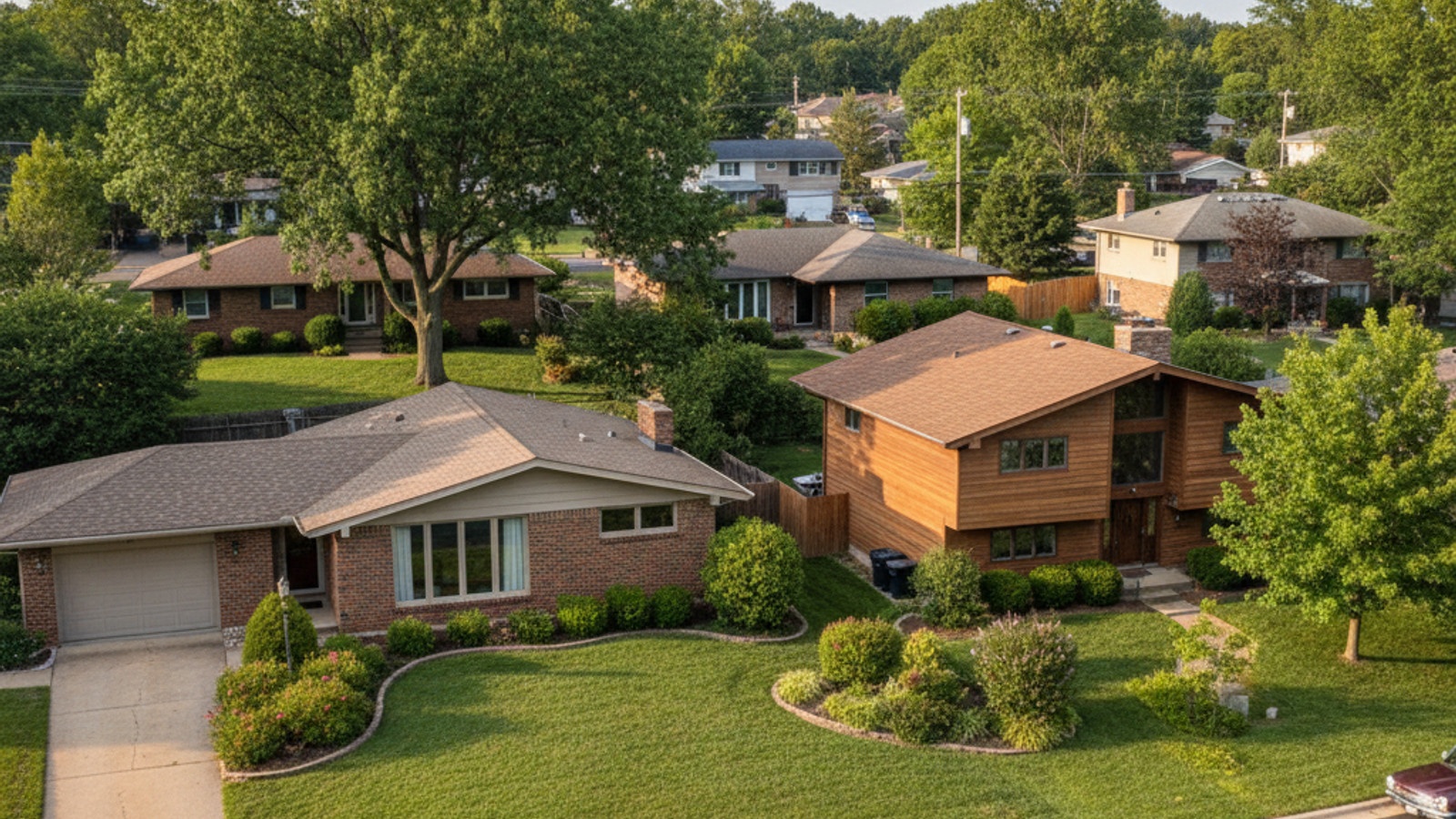
Moving toward the I-435 corridor opens up options for detached single-family homes. Buyers in this zone can often find three-bedroom houses with attached garages and fenced yards. The housing supply here features a mix of mid-century ranches and split-level designs.
Living near I-435 provides quick access to employment centers across the metro area. Most commuters can reach downtown or the Johnson County suburbs in under 25 minutes. This convenience helps maintain steady property values along the highway loop.
Infrastructure and School Districts
The physical surroundings of a home impact both its resale value and your daily routine. Proximity to well-maintained roads, public transit, and community resources matters. Buyers evaluate these elements even if they do not use them daily.
Municipal boundaries in the metro area create a patchwork of different service zones. A home with a Kansas City address might fall under a completely different school district or utility provider than a house three streets away. Always verify these boundary lines before submitting an offer.
Major Public School Zones
The Kansas City Public Schools district covers a massive portion of the urban core and surrounding neighborhoods. The city limits also overlap with several other districts. Buyers looking in the northern sections of the city often purchase homes zoned for North Kansas City Schools.
School district boundaries directly influence property tax levies. Two identical homes priced at $300,000 can have different monthly carrying costs if they sit in different districts. You should confirm the exact school assignments using the county parcel map.
Highway Access and Commute Times
The local highway system dictates how residents travel across the metro area. Homes positioned near I-35, I-70, or Route 71 offer faster commutes to major hospitals and corporate headquarters. Properties with easy highway access tend to hold their value well during market shifts.
Traffic patterns change depending on your location and work schedule. Buyers should test their potential commute during rush hour before making an offer. An extra 15 minutes of driving each way adds up to hours of lost time over a month.
Parks and Green Spaces
Access to outdoor recreation remains a strong draw for local buyers. Swope Park offers over 1,800 acres of trails, golf courses, and community facilities. Homes located within walking distance of the park entrances rarely sit on the market for long.
Loose Park provides a different type of amenity closer to the Country Club Plaza area. The 75-acre space features a rose garden, tennis courts, and a paved walking trail. Properties bordering this green space carry a premium price tag compared to similar homes further away.
Frequently Asked Questions
How much salary do I need to buy a $300,000 house in Kansas City?
You generally need a gross household income between $85,000 and $95,000 to comfortably afford a $300,000 home at current 6.6% interest rates. This assumes a 10% down payment and minimal existing debt. If you have high car payments or student loans, you will need a higher salary to qualify.
What is the average property tax rate in Jackson County, MO?
The median effective property tax rate in Jackson County, MO sits between 1.1% and 1.49% of the home’s assessed value. For a $300,000 property, expect an annual bill around $3,900. Local levies for schools and fire districts cause this exact percentage to fluctuate by neighborhood.
How do lenders calculate my debt-to-income ratio?
Lenders divide your total monthly debt payments by your gross monthly income. They include your projected new mortgage payment, credit card minimums, and installment loans in the math. They do not include everyday expenses like groceries, gas, or streaming subscriptions.

Dani Beyer, a Kansas City native, began her career in real estate in 2004 after working in the tech industry. Since then, she's helped thousands of families turn their dreams into keys! Dani is now the CEO and Lead Listing Specialist of 'Dani Beyer Real Estate' brokered with Keller Williams KC North. With 820+ Five Star reviews, she specializes in helping buyer and sellers in the Kansas City Northland.