
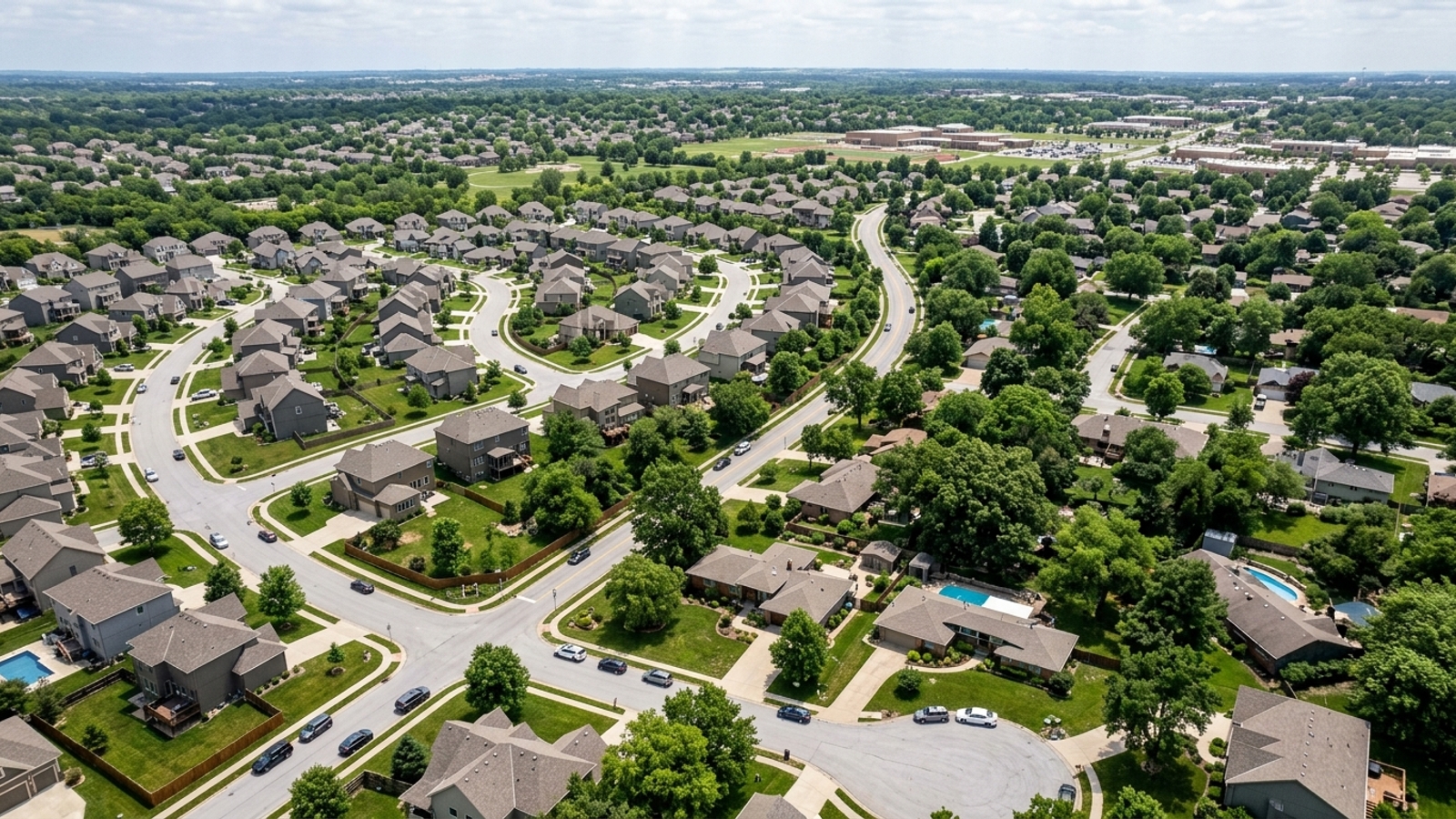
That state line running down the middle of the Kansas City metro isn’t just a formality – it separates two genuinely different real estate markets. A lot of buyers come in thinking they just need to find the right neighborhood, then realize pretty quickly that weighing the pros and cons of living in Kansas City, MO shapes almost everything: what they pay, what they’re taxed, and what kind of house they’re actually walking into.
The decision runs deeper than most people expect. Home values, inventory levels, and architectural styles all shift depending on which side of State Line Road you’re on. Getting clear on the differences between Jackson County, MO, and the Kansas counties – Johnson and Wyandotte, specifically – goes a long way toward matching your budget to what you’re actually hoping to buy.
Real Estate Markets and Home Prices
As of mid-2026, the Missouri side moves at a steady clip – homes are spending roughly 21 days on the market, with an approximate median sale price of $325,000. Recent data shows 651 homes sold in a single month, and the area is sitting on a 2.1-month supply of available homes. It’s a tight market, but not a frantic one.
Cross State Line Road into the Kansas suburbs and the pricing tier shifts upward in a hurry. In Johnson County, KS, the median sale price generally runs from $460,000 to over $475,000. That gap reflects the heavy concentration of newer suburban development on the Kansas side, compared to the established urban core you’re buying into in Missouri.
Property Taxes and Effective Rates
Tax bills depend on the county and the specific municipal levies layered on top. In Jackson County, MO, the effective property tax rate sits around 1.11% – above Missouri’s statewide average of 0.79%. Some calculations put it closer to 1.27% or even 1.49%, depending on the method used and which neighborhood tax district you fall into.
Johnson County, KS, carries an effective rate of roughly 1.09%, though some sources calculate it as high as 1.27%. The percentage looks similar to Missouri on paper, but it’s applied to significantly higher home values – which means the actual annual bill can come out larger than you’d see on a comparable home in Jackson County. That’s the number worth running before you make any assumptions.
Housing Styles and Architecture
The age of a neighborhood tells you most of what you need to know about what’s inside it. The Missouri side has a dense urban core and historic districts that were built out over more than a century, while the Kansas side expanded rapidly through the mid-to-late 20th century – different lot sizes, different street grids, a different feel altogether. Buyers who want walkable older neighborhoods tend to anchor their search in Missouri; buyers who want newer construction and more land tend to end up in Kansas.
Historic Homes in Missouri
Kansas City, MO, has its own distinct home type: the “KC Shirtwaist.” Built mostly between the early 1900s and 1930s, it’s a local variation on the American Foursquare – first floor in exposed brick or limestone, upper floors wrapped in wood siding. You’ll find them concentrated in Hyde Park, Westport, Midtown, Brookside, Roanoke, and Valentine. Near the Country Club Plaza, Craftsman bungalows and Colonial Revival homes are more common. Older sections of Lee’s Summit and North Kansas City turn up similar historic styles.
Suburban Construction in Kansas
The Kansas inventory leans toward mid-century and modern suburban designs. Mission Hills and Prairie Village are the exceptions – they offer Colonial Revival homes, mature trees, and traditional architecture that compares reasonably to the older Missouri neighborhoods. But push further into the Johnson County corridor and the landscape shifts to newer suburban construction: Overland Park, the city of Olathe, and Leawood are dominated by modern subdivisions with the larger lots that come with recent development. That’s also what’s driving the county’s overall median prices higher.
Everyday Living Costs Across the Metro
The mortgage payment is only part of what you’re committing to. Utilities, groceries, transportation – all of it feeds into what a given address actually costs you month to month.
On the Missouri side, the cost of living in KC sits about 11% below the national average, which makes it a genuinely attractive landing spot for buyers relocating from coastal markets or pricier Midwest metros.
Living on one side of the line while working on the other is a completely ordinary arrangement in this metro – but it’s worth thinking through before you commit. Varying local regulations and transportation costs don’t disappear just because the average commute time looks short on a map. Run those numbers the same way you’d run the tax rates.
Frequently Asked Questions
Is it cheaper to buy a home in Kansas City, Missouri, or across the state line in Kansas?
Generally, yes – the Missouri side costs less to get into. The approximate median sale price in Kansas City, MO, is $325,000, while homes in Johnson County, KS, typically sell between $460,000 and $475,000. The overall cost of living in Kansas City, MO, also runs about 11% below the national average, which adds up over time.
How do property tax rates compare between Kansas City, MO and the Kansas suburbs?
The effective rates are closer than most people expect – generally between 1.09% and 1.49% on both sides. Jackson County, MO, averages around 1.11%; Johnson County, KS, averages roughly 1.09%. Where it diverges is the actual bill: because median home values are meaningfully higher in Johnson County, buyers there tend to pay more in total annual taxes even when the percentage looks similar.

Dani Beyer, a Kansas City native, began her career in real estate in 2004 after working in the tech industry. Since then, she's helped thousands of families turn their dreams into keys! Dani is now the CEO and Lead Listing Specialist of 'Dani Beyer Real Estate' brokered with Keller Williams KC North. With 820+ Five Star reviews, she specializes in helping buyer and sellers in the Kansas City Northland.