
Buyers shopping in the Midwest often end up weighing the pros and cons of living in Kansas City, MO against Missouri as a whole – and while that matchup has plenty of history in college sports, in real estate it’s a concrete question about money, location, and trade-offs. You’re essentially choosing between a major metro housing market and a statewide landscape that includes everything from college towns to rural farmland.
The decision turns on the cost of housing, property taxes, and daily living expenses. Kansas City has its own urban and suburban character that looks pretty different from the smaller towns and open country that make up most of Missouri. Getting clear on those differences early helps you set a realistic budget and stop wasting weekends on the wrong ZIP codes.
Comparing Kansas City to the Rest of Missouri
Missouri is a big state with a wide range of housing options, but Kansas City runs on its own economic engine. Statewide data pulls in agricultural acreage out in the Ozarks, suburban developments outside St. Louis, and everything in between. Kansas City, MO sits entirely within Missouri but operates with higher housing demand, denser infrastructure, and a different cost structure than the state average would suggest.
If you’re moving to Kansas City from somewhere else in Missouri, you’ll notice the pace shift almost immediately. Homes move faster, competition for updated properties is real, and the days of leisurely open-house browsing are largely behind you. Comparing the city to the statewide baseline gives you a honest read on what it actually costs to be in one of Missouri’s major economic hubs.
Housing Market and Home Prices
The median sale price in Kansas City, MO sits around $325,000 as of mid-2026. Homes are spending roughly 21 days on the market before going under contract, and with about 2.1 months of supply, the city leans toward a seller’s market. That means when you find something that fits, you need to move.
Across the state, the picture shifts. Missouri’s median sale price in June 2026 was approximately $299,064 – about $26,000 less than Kansas City. Buyers looking outside the city limits often find their budget goes further, though what you gain in price, you typically give back in commute time and proximity to amenities.
Comparing Median Home Prices
That roughly $26,000 gap is the price of location. In Kansas City, $325,000 generally gets you a suburban single-family home or a modernized urban condo. In rural Missouri or a smaller town, that same number often buys more square footage and a bigger piece of land.
The practical implication for buyers is straightforward: your down payment will need to be slightly larger to match Kansas City’s higher median, and your monthly mortgage payment will reflect that premium. Build it into your pre-approval conversation before you start scheduling showings.
Property Types and Architectural Styles
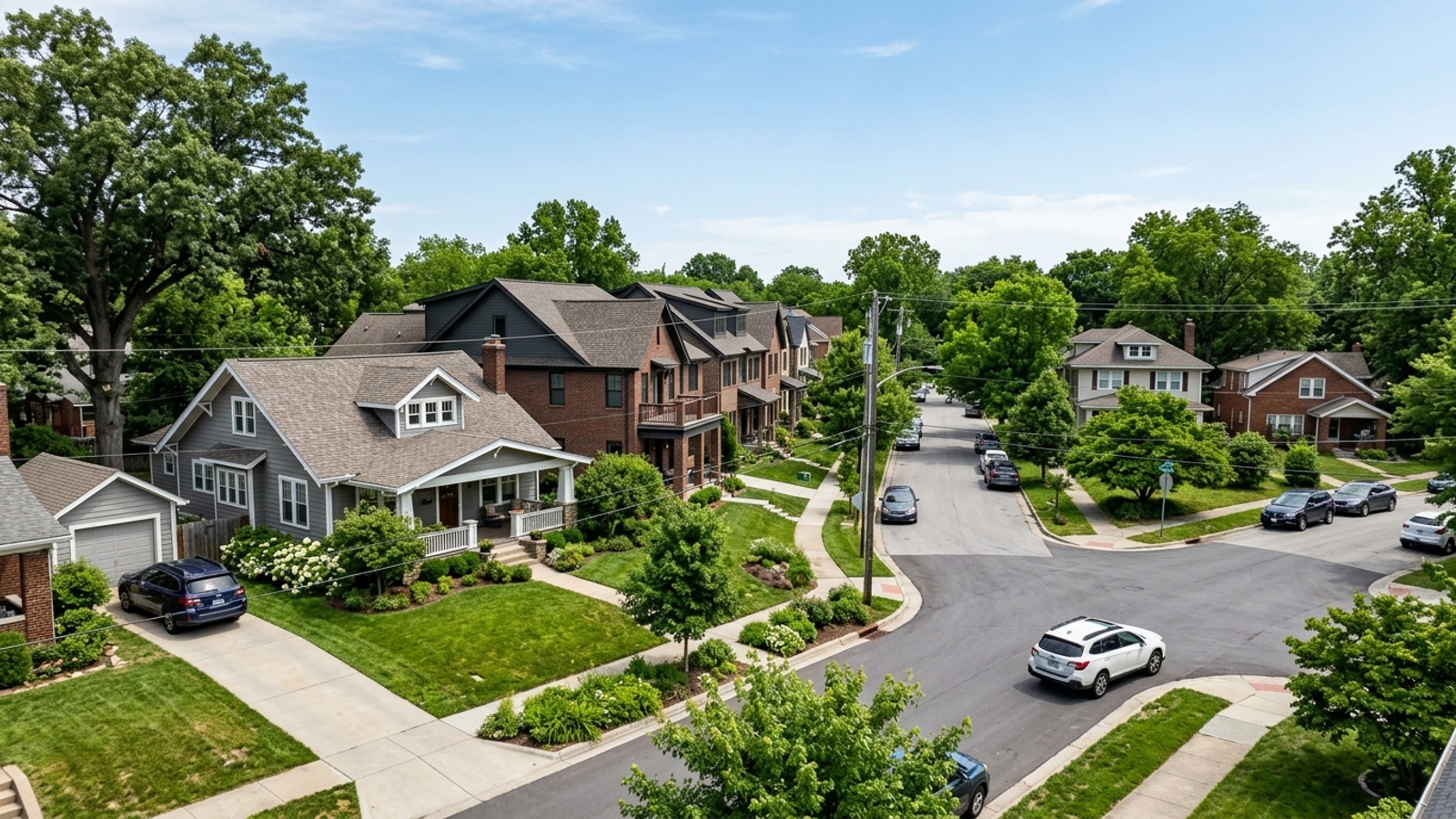
Kansas City has a genuine mix – historic bungalows, mid-century modern ranches, newly constructed townhomes, high-rise condos in the urban core, converted lofts. If walkable access to transit and restaurants matters to you, the options are there.
Outside the metro areas, Missouri’s inventory tilts toward traditional single-family homes, farmhouses, and properties with acreage. Whether you want land or a lock-and-leave urban place, your search geography largely determines your choices.
Cost of Living and Property Taxes
Kansas City, MO carries a cost of living index of 87, which is 13% below the national average of 100. That sounds affordable – and compared to coastal cities, it is. But the statewide Missouri cost of living index is 75, which means Kansas City runs about 13% more expensive than the Missouri state average. Housing and utilities drive most of that gap.
For a buyer coming from the coasts, Kansas City will still feel like a relative bargain. For someone relocating from a smaller Missouri town, the adjustment is real and worth running through your monthly budget before you commit.
Comparing Property Tax Rates
Missouri’s average effective property tax rate on owner-occupied homes is 0.89% in 2026, which ranks 23rd nationally.
Kansas City runs higher. The city’s median effective property tax rate is 1.15%, and most of it falls within Jackson County, where effective rates generally range from 1.11% to 1.19%. On a home valued at the county median of $213,300, that works out to approximately $2,448 per year in taxes – a number worth having your lender fold into your monthly escrow estimate before you finalize a budget.
Everyday Living Expenses
Utilities, groceries, and transportation in Kansas City outpace the rural state average. The metro runs on personal vehicles, so gas and parking are genuine recurring costs, not rounding errors.
A useful exercise: take your current monthly spending, apply the 13% index difference, and see what that does to your cash flow. It’s not a perfect model, but it gives you a realistic starting point before you’re deep into a transaction.
Geography, Climate, and Property Maintenance
Missouri is a four-season state, and Kansas City doesn’t get any exceptions. Hot, humid summers and cold, snowy winters are standard – and they’re hard on houses. Consistent exterior maintenance is part of ownership here, wherever in the state you land.
In Kansas City specifically, older homes often need close attention to foundations and HVAC systems because of those temperature swings. Rural Missouri homes face the same weather, but they frequently come with septic systems or well water too, which means different maintenance routines than the municipal connections you’d have in the city.
Deciding Where to Buy
The data lays out a clear trade-off. Kansas City asks for a higher median purchase price of $325,000 and higher property taxes, and in return you get access to a major job market and attractions in Kansas City. The broader state comes in around $299,064 with a lighter tax burden and more room to breathe – literally and financially.
Neither answer is wrong. It depends on where your pre-approval lands and what your daily life actually needs to look like. Run both scenarios against your financing before you decide which direction to focus your search.
Frequently Asked Questions
Do I have to pay the 1% earnings tax if I buy a home in Kansas City, MO but work in a different city?
Check the Kansas City municipal website or talk to a tax professional to confirm how local taxes apply to your specific address and employment situation. It’s an important piece of the puzzle when you’re comparing the city’s cost of living index of 87 to the broader Missouri average.
How do property taxes in Kansas City, Missouri compare to the Kansas side of the metro?
Kansas City, MO sits mostly in Jackson County, where the effective property tax rate runs between 1.11% and 1.19%. You’ll want to pull the specific county tax rates on the Kansas side and compare them directly to that range and to the 0.89% Missouri state average.
Are all homes within the Kansas City, MO city limits zoned for Kansas City Public Schools?
School district boundaries don’t follow city limits perfectly. Before you make an offer, check the specific boundary map on the district site to confirm which schools are assigned to the property you’re considering. Not all homes within the Kansas City, MO city limits are zoned for Kansas City Public Schools.
Can my real estate agent show me houses in both Kansas City, MO and Kansas City, KS?
Yes, as long as your agent holds an active license in both Missouri and Kansas. Many local agents maintain dual licenses specifically to show properties across the state line.
What are the differences in closing costs and title fees between buying a house in Missouri versus Kansas?
Closing costs and title fees vary by state and county regulations. Pull loan estimates for properties in Kansas City, MO – where the median home price is $325,000 – and compare them side by side with estimates for Kansas properties. The actual numbers will tell you more than any general guideline.
How do I know if a property is located in Kansas City, MO or an unincorporated part of Jackson or Clay County?
Check the local county property tax assessment records – that’ll confirm the exact jurisdiction. It matters because homes in Kansas City, MO are subject to the city’s 1.15% median effective tax rate, while unincorporated areas can have a different tax structure entirely.

Dani Beyer, a Kansas City native, began her career in real estate in 2004 after working in the tech industry. Since then, she's helped thousands of families turn their dreams into keys! Dani is now the CEO and Lead Listing Specialist of 'Dani Beyer Real Estate' brokered with Keller Williams KC North. With 820+ Five Star reviews, she specializes in helping buyer and sellers in the Kansas City Northland.