
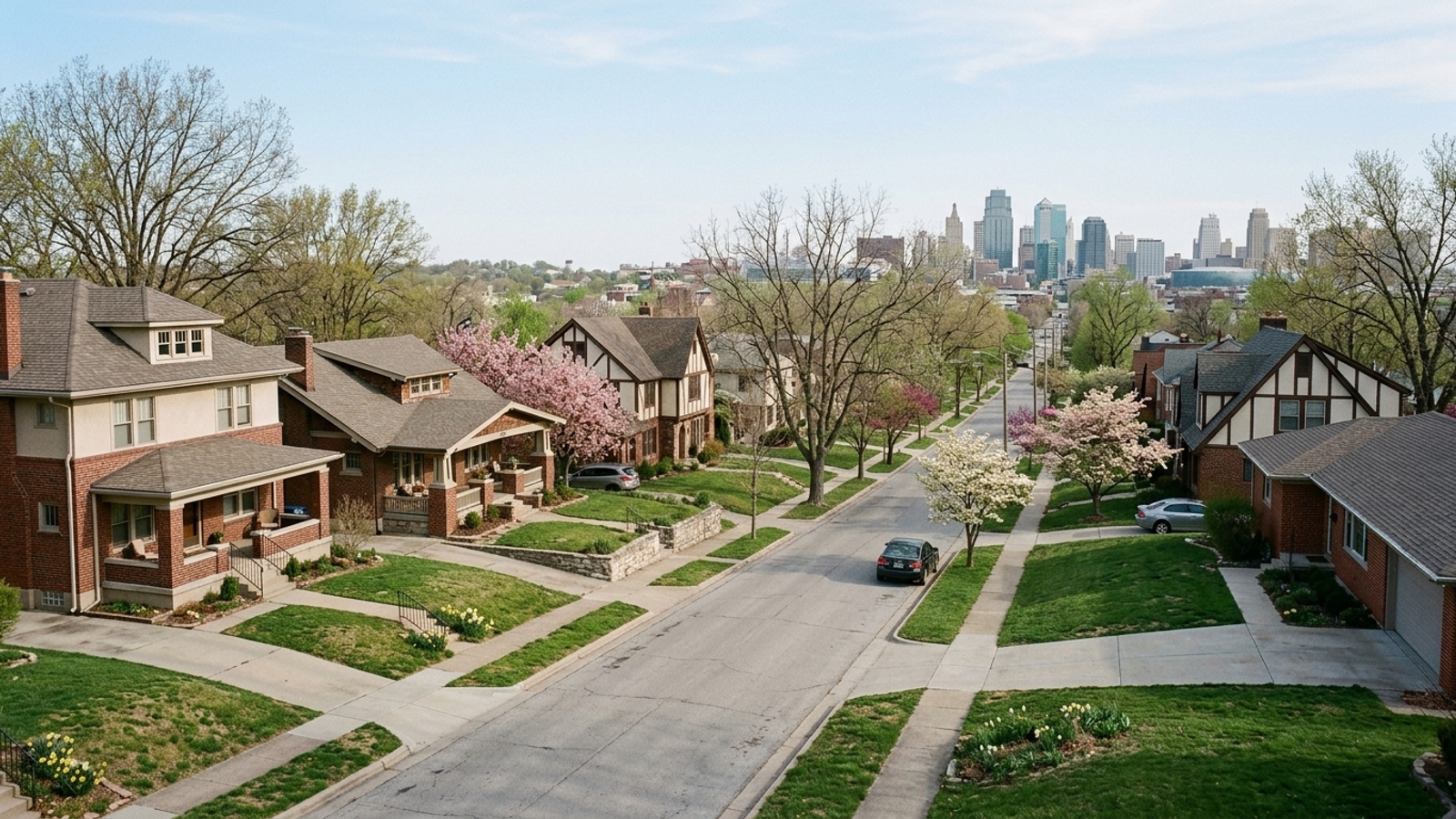
Kansas City, MO is the largest city in Missouri and a genuine economic and cultural anchor for the Midwest. U.S. Census Bureau estimates put the current population across all Kansas City, MO zip codes at 521,220 residents – good enough to rank it 37th largest in the country.
If you’re buying or selling here, population trends are worth paying attention to. A city that keeps growing means more people competing for the same housing stock, and that pressure shows up in property values, new construction timelines, and how backed-up the commute gets on I-70 through Jackson County.
How Many People Live in Kansas City, MO?
The U.S. Census Bureau’s Vintage 2025 estimate puts Kansas City at 521,220 people, which makes it the most populous city in Missouri. Between 2010 and 2020, the city grew 10.5% – from 459,787 residents to nearly 508,000. That’s not explosive growth, but it’s been consistent, and consistent is what moves a housing market.
A Decade of Steady Growth
That 10.5% increase wasn’t a fluke. It tracked alongside a strengthening local economy and sustained demand for housing across Jackson County and the surrounding area. Buyers entering the market today are feeling what that decade of growth built: thin inventory and real competition for well-priced homes.
Population Density and the Local Layout
Kansas City covers 314.5 square miles of land – a big footprint. That spread keeps the overall density moderate compared to coastal metros, sitting at roughly 1,657 residents per square mile. Most of the city has a distinctly suburban feel because of it, even as downtown holds its dense core of mid-rise and high-rise buildings.
Traffic and Daily Commutes
That low-to-moderate density means most people drive. I-70 and I-35 carry the bulk of commuter traffic in and out of the city center, and if you’re narrowing down neighborhoods, highway access and realistic drive times deserve a spot on your checklist.
How Population Expansion Impacts the Housing Market
The numbers here tell a pretty clear story. Kansas City has roughly 245,346 total housing units, with 55.4% owner-occupied and 44.6% rented. Despite that supply, the market is tight: the median sale price sits at approximately $309,695, homes are spending a median of just 19 days on the market, and active listings stand at around 1,834 with only 2.8 months of supply. Sellers have the leverage right now, and the inventory picture is why.
New Construction and Development Projects
Developers aren’t standing still. The privately financed Berkeley Riverfront mixed-use development is a $1 billion project that’s bringing 429 residential units and 48,000 square feet of retail in its first phase alone. The $527 million West Bottoms historic redevelopment will eventually add over 1,200 residential units. The city is also directing over $400 million toward the 18th and Vine Jazz District through the ‘Revive the Vine’ initiative.
The biggest number on the board, though, belongs to the Housing Authority of Kansas City. Their $2.6 billion plan targets 7,159 units of housing through new construction, redevelopment, and acquisitions – and it’s a multi-year effort, so don’t expect that supply to hit the market all at once.
Frequently Asked Questions
Is Kansas City growing or shrinking?
It’s growing. Between 2010 and 2020, the population increased by 10.5%, and the Vintage 2025 estimate places the total at 521,220 residents.
What is the population density of Kansas City?
Roughly 1,657 people per square mile, spread across 314.5 square miles of land.
How many homes are in Kansas City?
Approximately 245,346 total housing units. Of the occupied units, about 55.4% are owner-occupied and 44.6% are rented.
How is Kansas City’s population growth affecting local house prices?
More people, tighter supply. The median sale price has reached approximately $309,695, and homes are spending a median of just 19 days on the market.
Which neighborhoods in Kansas City, MO are seeing the most population growth?
The most visible construction activity is in areas receiving major mixed-use redevelopments – the Berkeley Riverfront and the West Bottoms are both in line for thousands of new residential units.
Is there a housing shortage in Kansas City due to the growing population?
The supply is genuinely low – about 2.8 months of inventory available right now. The Housing Authority of Kansas City’s $2.6 billion plan to deliver 7,159 new units is the biggest move aimed at closing that gap, though the timeline stretches across multiple years.
Where is Kansas City, MO located?
The city is located in the Midwest and serves as the largest municipality in Missouri, with its primary footprint in Jackson County. Because the area covers 314.5 square miles of land, finding the right Kansas City neighborhood usually depends on your preferred commute times along I-70 or I-35.

Dani Beyer, a Kansas City native, began her career in real estate in 2004 after working in the tech industry. Since then, she's helped thousands of families turn their dreams into keys! Dani is now the CEO and Lead Listing Specialist of 'Dani Beyer Real Estate' brokered with Keller Williams KC North. With 820+ Five Star reviews, she specializes in helping buyer and sellers in the Kansas City Northland.