
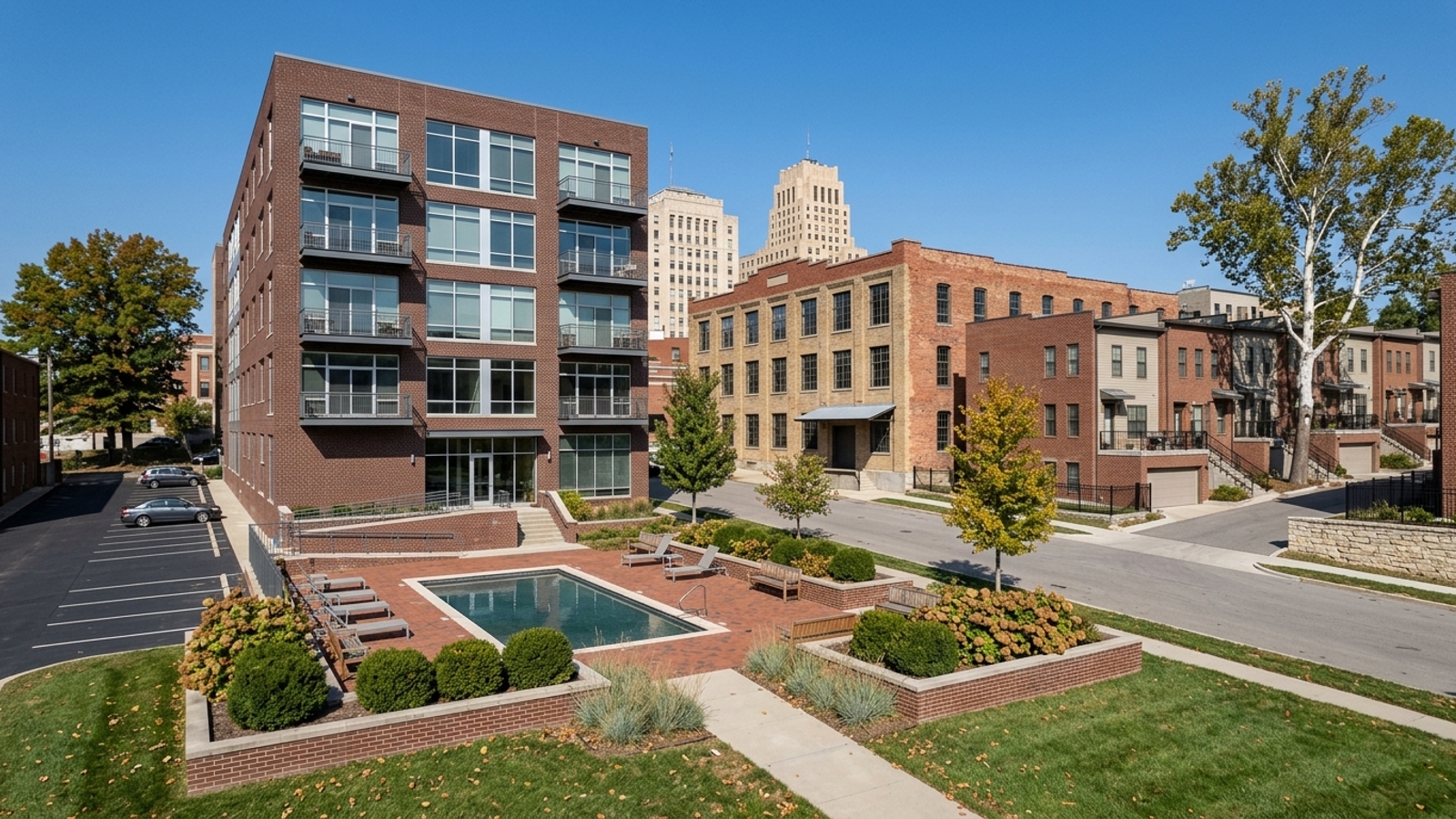
The Kansas City, MO real estate market moves fast – homes have been averaging just 19 days on market before going under contract. If you’re a first-time home buyer in Kansas City, MO weighing these property types, the overall median sale price sits around $309,695, but that number shifts considerably depending on the property style you’re looking at.
The broader market has traditional single-family houses, but attached housing – condos, townhomes, multi-family – is worth a serious look if location and lower maintenance are priorities for you. With roughly 2.8 months of supply across the city right now, knowing the difference between a downtown high-rise, a suburban townhome, and a duplex will save you real time in your search.
Finding a Condo in Kansas City
Condo inventory here moves around more than you’d expect, and it also depends on which listing service you’re pulling from. Active condo and apartment listings have ranged anywhere from about 51 to 269 units on the market at any given time, so what you see on a given Tuesday isn’t necessarily what’s there on Friday.
That’s exactly why setting up targeted alerts matters. Filter by price, bedroom count, and square footage, then let the system work for you – especially given that roughly 35% of all homes in the area recently sold above asking price. If you’re waiting to browse manually every few days, you’re already behind.
Setting Up Your Property Alerts
Getting notified the moment something hits is a real advantage in this market. You can configure alerts to specify a high-rise in the city center versus a smaller suburban complex, so you’re not wading through listings that don’t fit.
If you have firm requirements – covered parking, in-unit laundry, a specific building – narrow those parameters before you start. Your agent can help you dial in the filters so you’re only looking at properties worth your time.
Current Prices and Market Trends for Attached Homes
Condos generally come in at a lower entry point than detached properties. The median price for a condo is around $215,000, compared to roughly $299,962 for a single-family home.
Location moves those numbers. In the downtown area specifically, the median listing price for a condo runs about $279,000, with recent sold prices landing around $250,267. So there’s a gap between what sellers are asking and what buyers are paying – worth keeping in mind when you’re making an offer.
Evaluating the Current Market
The overall local market has seen median sale prices rise about 3% year-over-year, and inventory staying relatively tight means well-priced units in good buildings don’t sit long.
Don’t just lean on neighborhood averages. A building with strong reserve funds and solid management often commands a premium over a comparable unit a few blocks away – and for good reason. Pull the recent sales data for the specific building you’re considering, not just the ZIP code.
Understanding Condo Association Fees
Monthly condo association fees in the area typically range from $300 to over $700, depending on the building’s age and how extensive its amenities are. The county-wide median monthly HOA fee for condos is $342. For context, suburban single-family HOAs usually run between $150 and $300 per month – though they’re covering far fewer shared expenses.
That range matters when you’re calculating your true monthly cost. A unit that looks affordable on paper can look different once you add $600 in dues.
What Your Dues Cover
Higher-end buildings push your monthly costs toward the top of that range. The View, for example, offers indoor and outdoor pools, tennis and pickleball courts, a sauna, a theater room, and overnight security – with fees ranging from about $319 to $1,178 per month.
Before you close on anything, ask for the association’s financial documents. You want to see whether the reserve fund can handle a roof replacement or elevator repair without hitting owners with a special assessment. That’s not a box-checking exercise – it’s one of the more important things you’ll do in this process.
Popular Neighborhoods and Named Buildings
Downtown and the Crossroads Arts District hold a large share of the city’s attached housing inventory, drawing buyers who want immediate access to dining, entertainment, and public transit. The Country Club Plaza area offers established condo communities with a different feel – more architectural variety, a mix of older stately buildings and modernized units.
Where you land depends a lot on what you want outside your front door.
Notable High-Rises to Consider
Several buildings stand out in the local market: Wall Street Tower, The Metropolitan, Santa Fe Place, and the Sulgrave Condominium. The Grand, located in the historic Traders building at 1125 Grand Ave, puts you right near the T-Mobile Center. Then there’s 909 Walnut, which offers luxury units at the center of the city.
The catch with popular buildings is that they don’t always have active listings. Work with an agent who tracks unit turnover in these towers specifically – otherwise you’re guessing.
Luxury and Riverfront Property Options
The luxury segment means higher-end finishes, more square footage, better views, and often dedicated concierge services with secure, deeded parking. It’s a different ownership experience than a standard mid-rise.
Buyers looking for specific geography will find options near the Missouri River and Brush Creek. Those locations feel distinct from the denser downtown grid – if that matters to you, it’s worth seeing in person before you decide.
New Construction and Premium Units
New-construction condos do come to market periodically, and they typically command the highest price per square foot in the attached sector – you’re paying for modern floor plans and updated energy efficiency.
Factor in property taxes and premium insurance costs when you’re running the numbers on a luxury unit. Those carrying costs sit on top of your mortgage and association dues, and in the higher price ranges, they’re not trivial.
Townhomes, Duplexes, and Multi-Family Options
A high-rise condo isn’t the right fit for everyone, and the market has other options. Townhomes give you multi-level living, often with an attached garage and a small private outdoor space – a meaningfully different day-to-day experience than a single-floor condo unit.
Duplexes and multi-family properties are worth considering if rental income is part of your thinking. You live in one unit and lease out the other – it’s one way to have your housing costs partially offset by a tenant.
Comparing Attached Alternatives
Townhome HOA fees are generally lower than high-rise condo fees because you’re not sharing an elevator, a concierge desk, or a pool. Check the maintenance agreements carefully, though – you want to know who’s responsible for exterior repairs and landscaping before you sign anything.
Co-ops and apartments for sale exist here, but they’re less common than in coastal cities. If you’re considering a co-op, confirm early that your lender supports that loan type. Not all of them do, and finding that out late in the process is a headache you don’t need.
Evaluating the Local Cost of Living
Kansas City consistently comes in below the national average for overall living expenses. Depending on which tracker you use, the local cost of living index falls between 87 and 94 – meaning total costs run roughly 6% to 13% lower than the U.S. baseline.
That gap is real, and it gives first-time buyers and people looking to reduce their maintenance load more breathing room in the budget than they’d have in most major metros.
Buying Versus Renting
How long you plan to stay is the central question. Buying builds equity over time, particularly in a market where values have trended upward. Renting gives you flexibility and zero maintenance responsibility – which is legitimate if you’re on a short-term work assignment or not sure where you’ll be in two years.
Run the actual numbers: compare current rental rates against the combined monthly cost of a mortgage, property taxes, and association fees for a comparable unit. That comparison is more useful than any general rule of thumb.
Frequently Asked Questions
How much do condos cost in Kansas City, MO?
The median price for a condo in the area is around $215,000. In the downtown district, the median listing price is roughly $279,000, with the median sold price coming in at $250,267.
What are typical HOA fees for condos in Kansas City?
Monthly condo association fees generally range from $300 to over $700. The county-wide median monthly fee is $342. Amenity-rich buildings like The View charge between $319 and $1,178 per month depending on the unit.
Are condos in Kansas City a good investment?
The overall local median sale price has increased about 3% year-over-year, and the area’s cost of living – running 6% to 13% below the national average – helps buyers hold onto more of their capital. Whether it makes sense for you personally depends on your timeline and financial situation.
Can I buy a condo in Kansas City directly from the owner (FSBO)?
Yes, if a seller lists the property for sale by owner, you can purchase directly from them. That said, you should still hire a real estate attorney or agent to review the association’s financial documents and handle the purchase contract – don’t skip that step just because there’s no listing agent involved.
Which Kansas City neighborhoods are best for luxury or riverfront condos?
Downtown and the Crossroads Arts District are the primary locations for luxury high-rises like 909 Walnut and Wall Street Tower. If you want water proximity, look for properties near the Missouri River or Brush Creek.
Should I buy a condo or a townhome in Kansas City, MO?
It comes down to what you want out of your living space. Condos often come with extensive shared amenities and single-level floor plans. Townhomes typically offer multi-level layouts, private garages, and lower monthly association fees. Neither is universally better – it depends on how you live.
What happens if a Kansas City condo association issues a special assessment?
If the association doesn’t have enough in its reserve fund to cover a major repair, owners pay a special assessment to cover the shortfall. Reviewing the HOA’s financial statements before you close is how you spot whether a large-scale project is already on the horizon – and whether you’d be walking into that bill.

Dani Beyer, a Kansas City native, began her career in real estate in 2004 after working in the tech industry. Since then, she's helped thousands of families turn their dreams into keys! Dani is now the CEO and Lead Listing Specialist of 'Dani Beyer Real Estate' brokered with Keller Williams KC North. With 820+ Five Star reviews, she specializes in helping buyer and sellers in the Kansas City Northland.