
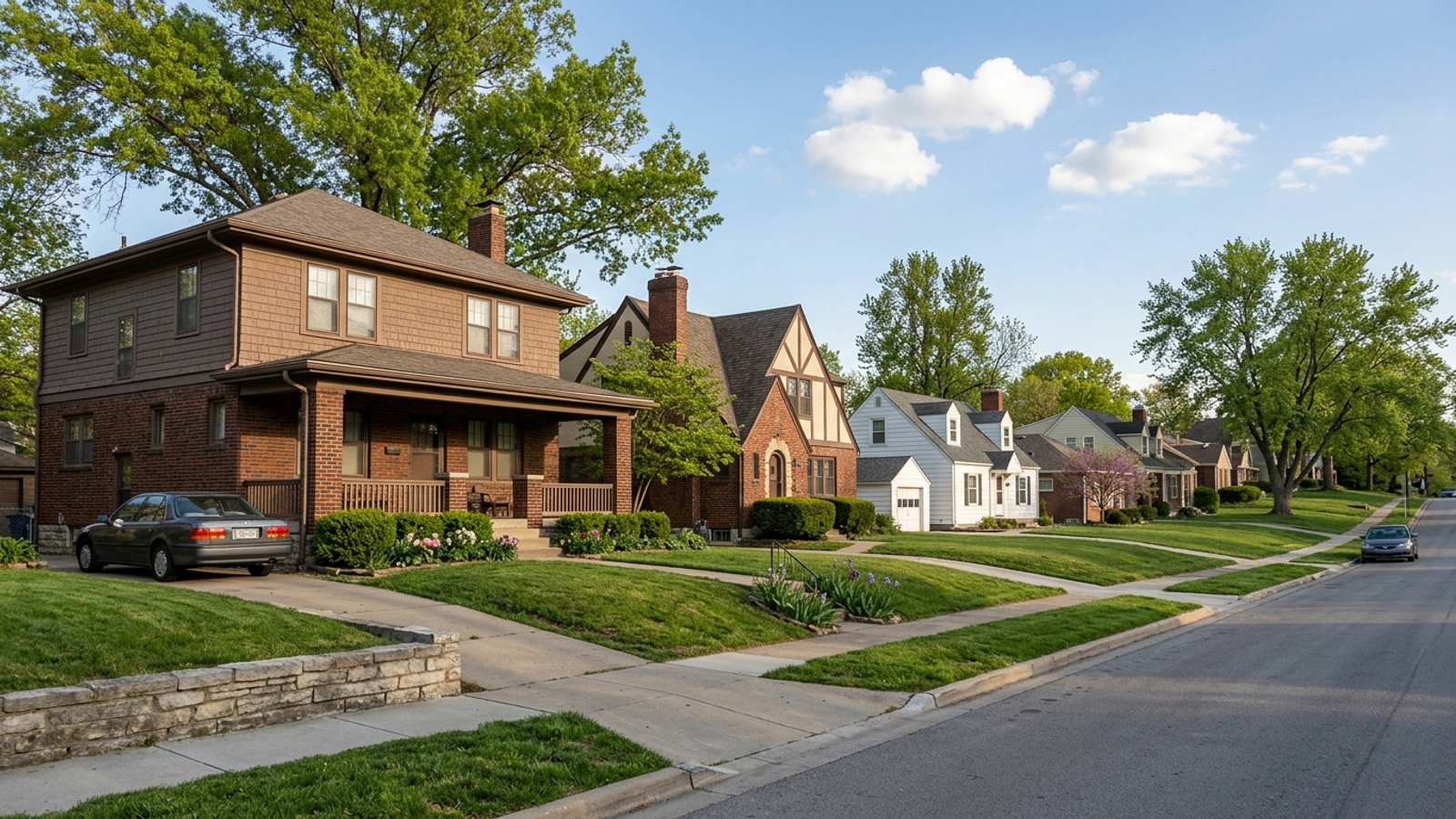
Homes in Kansas City, MO are currently selling for a median price of around $310,000, up about 3% year-over-year based on recent data. Properties are moving fast – spending roughly 19 days on the market before going under contract. This fast pace can be especially challenging for first-time home buyers in Kansas City, MO.
For buyers and sellers alike, financing costs dictate how much home fits into a budget and how large the buyer pool is for any given listing. Tracking local market prices and effective tax rates matters just as much as understanding the loan terms available to you.
Where to Find Current Mortgage Rates in Kansas City
Mortgage rates aren’t set by a single local authority. They move with global financial markets and individual lender policies, which means the daily rate you see advertised on a national website rarely reflects what you’ll pay. Those figures typically assume a perfect credit score, a 20% down payment, and sometimes the purchase of discount points to buy the rate down.
To get a number that means something, you need a same-day quote from a local lender or an official Loan Estimate – one that accounts for your specific financial profile and the exact property you want to buy.
Why Your Rate Changes Daily
Lenders adjust their pricing daily, and sometimes multiple times a day, based on the bond market and mortgage-backed securities. Until you formally lock in a rate, your quoted percentage floats with the broader economy.
A quote you receive Tuesday morning might not be valid by Wednesday afternoon. Stay in close contact with your loan officer while you’re shopping – your pre-approval needs to reflect what the market is doing right now.
How Rate Changes Affect Your Buying Power in Jackson County
Jackson County has an effective property tax rate of about 1.49%, which means a median-priced home of roughly $310,000 carries an annual tax bill around $2,570. Once you fold principal, interest, taxes, and insurance into a single monthly number, even a half-percent shift in your rate changes your budget in a meaningful way.
A lower rate extends your buying power – you can afford a higher purchase price for the exact same monthly payment. When rates rise, buyers often have to look at lower price points to keep costs manageable. That trade-off between price and rate is a constant factor in the Kansas City metro.
Comparing Monthly Payments on a Median-Priced Home
Take a $310,000 purchase with a 20% down payment ($62,000), leaving a loan balance of $248,000. At an illustrative 6% fixed rate, principal and interest runs about $1,487 per month. At 6.5%, that same payment jumps to roughly $1,567. At 7%, it reaches $1,650.
Those incremental differences add tens of thousands of dollars over the life of a 30-year loan. That’s why getting the best possible terms isn’t a minor detail – it’s the whole game.
Fixed vs. Adjustable-Rate Mortgages and Other Loan Types
The 30-year fixed-rate mortgage is still the most common choice for buyers in the metro. Your principal and interest payment is locked in for the life of the loan – nothing adjusts, nothing surprises you five years from now. A 15-year fixed loan works the same way and typically comes with a lower interest rate, though the monthly payment is higher since you’re paying off the balance in half the time.
Adjustable-rate mortgages (ARMs) offer a lower fixed rate for an introductory period – usually five to seven years – before adjusting annually based on market conditions. Buyers who plan to move or refinance before that introductory period ends sometimes choose ARMs to reduce their costs in the short term. It’s a calculated bet, and it can make sense depending on your timeline.
Conventional, FHA, VA, and USDA Differences
The type of loan you choose also affects the rate you receive. Conventional loans reward high credit scores and larger down payments with competitive pricing. Government-backed options – FHA, VA, and USDA – have different underwriting standards and often carry lower base rates than conventional products, but they come with mortgage insurance premiums or funding fees that affect your total monthly cost.
Don’t just compare the interest rate. Compare what you’ll pay every month.
How to Secure the Best Mortgage Rate as a Buyer
Your credit score is the single biggest factor you can control. Borrowers with scores above 740 typically see the best pricing; lower scores mean you’ll pay a higher rate to offset the lender’s risk. A larger down payment helps too, since it lowers your loan-to-value ratio and reduces the lender’s exposure.
You also have the option to pay upfront discount points at closing to permanently buy down your rate – essentially prepaying interest in exchange for a lower monthly payment for the life of the loan. Whether that math works in your favor depends on how long you plan to stay in the home.
The Role of Credit Scores and Rate Locks
Once you’re under contract, you can lock your rate. A rate lock guarantees your quoted percentage for a set period – typically 30 to 60 days – protecting you from market spikes while your loan moves through underwriting.
Ask your lender about their lock policies upfront, including whether there’s a fee to extend if closing gets delayed. Some lenders offer a float-down option that lets you capture a lower rate if the market improves before you close. It’s worth asking about.
Choosing a Local Mortgage Lender in the KC Metro
The Kansas City market straddles the Missouri and Kansas state line, and that creates unique tax and regulatory situations that a national call-center representative simply won’t be prepared for. A local lender understands those cross-border nuances and maintains relationships with area appraisers and title companies – which matters when you’re trying to keep a transaction on schedule.
When you’re shopping for a loan, apply with at least two or three different institutions and compare Loan Estimates side by side. You’re not obligated to anyone until you commit, and the differences in fees and pricing can be significant.
Questions to Ask Your Lender
Before you commit, get direct answers to these:
- Are you licensed to originate loans in both Missouri and Kansas?
- What are your specific origination fees and closing costs?
- Do you handle underwriting in-house, or is it outsourced?
- How quickly can you close a standard conventional or FHA loan?
You can work with a retail bank, a credit union, a direct lender, or a mortgage broker. Brokers shop your file to multiple wholesale lenders to find the best terms; direct lenders fund the loans themselves. Both can work – what matters is the pricing and the service.
What Rate Trends Mean for Kansas City Sellers
Kansas City currently has about 2.8 months of housing supply, which keeps the market competitive for available listings. When financing costs rise, some buyers pull back, and that shows up in fewer showings and less aggressive offers on new listings. Pricing your home accurately based on current demand – not what things sold for a year ago – matters more than most sellers expect.
The flip side is real too. When rates dip, buyer activity can surge quickly, and a home that was sitting might suddenly draw multiple offers. If you’re planning to list, keep an eye on rate trends. They move faster than most people realize, and timing your listing around a rate shift can make a genuine difference in your results.
Mortgage Rate FAQs
What are mortgage rates today in Kansas City, MO?
Rates change multiple times a day based on the bond market. To get an accurate daily rate, you need a specific quote or Loan Estimate from a local lender based on your credit score and down payment.
Should I wait for rates to drop before buying a home in Kansas City?
Timing the market is impossible, and waiting for lower rates can backfire if home prices continue to rise. Focus on finding a home that fits your monthly budget right now – you can always explore refinancing later if market conditions improve.
How do I get the best mortgage rate as a buyer in Kansas City?
Improve your credit score, save for a larger down payment, and shop around. Comparing Loan Estimates from multiple local lenders will get you the most competitive combination of rates and fees.
How do I choose a mortgage lender in Kansas City, MO?
Look for a local professional who understands the Missouri and Kansas state line. Ask about their in-house underwriting process, compare their closing costs, and find out whether they’re available on weekends when you’re writing offers.
How much does a 1% difference in a mortgage rate affect my buying power in Kansas City?
A 1% shift changes your monthly principal and interest payment by hundreds of dollars. On a median-priced $310,000 home, that difference can determine whether a property fits your budget or whether you need to look at lower price points to keep costs manageable.
When should I lock in my mortgage rate while house hunting in the KC area?
Lock your rate as soon as you have a signed purchase agreement and a closing date. A standard lock lasts 30 to 60 days, protecting your payment from market volatility while the loan goes through underwriting.
Ready to Buy or Sell in Kansas City?
Homes in the area are selling for an average of 99.8% of their list price, which means both buyers and sellers need a clear strategy going in. Talking to a local real estate agent is the right first step – even before you apply for a loan.
A good agent connects you with trusted local lenders and helps you build a budget that accounts for both financing costs and Jackson County property taxes. If you’re planning a move in the metro area, reach out and let’s build a plan around your specific timeline.

Dani Beyer, a Kansas City native, began her career in real estate in 2004 after working in the tech industry. Since then, she's helped thousands of families turn their dreams into keys! Dani is now the CEO and Lead Listing Specialist of 'Dani Beyer Real Estate' brokered with Keller Williams KC North. With 820+ Five Star reviews, she specializes in helping buyer and sellers in the Kansas City Northland.